
A Rapid City orthopedic surgeon breaks down the science of joint longevity, and what you can do starting this week.
Most of us don’t think about our joints until they start complaining. You wake up one morning and your knee aches, or your hip feels stiff on the stairs, and you wonder when that started happening. Probably longer ago than you think.
Dr. David Woodard, an orthopedic surgeon with Monument Health Orthopedic and Specialty Hospital, has a word for this pattern: predictable. He sees it constantly, and he has a lot to say about what people could be doing differently, long before a surgeon ever enters the picture.
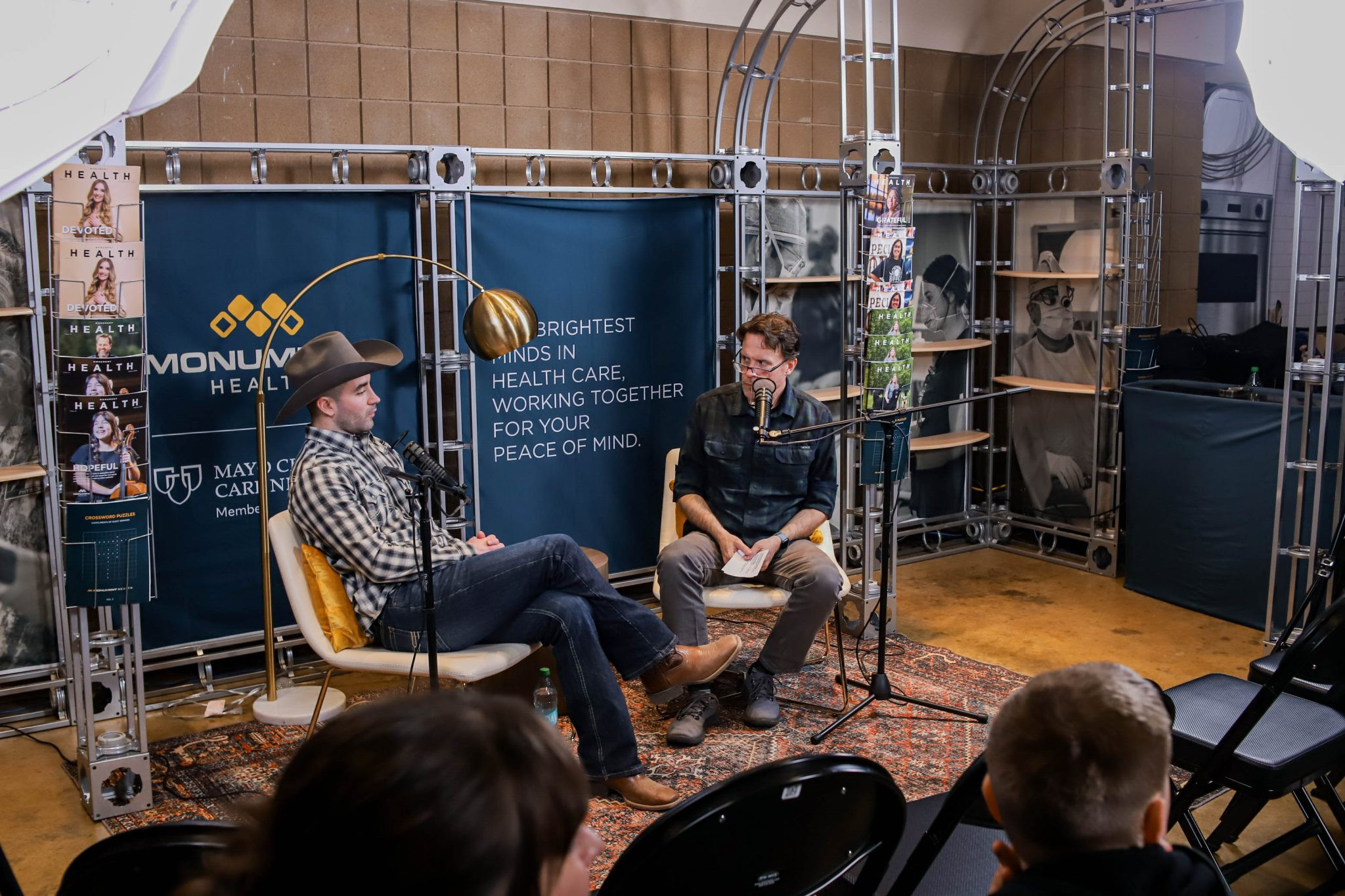
Woodard recently appeared on Doc Talk, recorded live at the Black Hills Stock Show and Rodeo, to talk about what he calls “joint biohacking,” which turns out to be far less sci-fi than it sounds. He said he’s “most fulfilled by giving people the opportunity to continue to do those things they enjoy most,” and that drive shapes everything about how he approaches his patients before they ever need surgery.
The Two Things That Actually Have High-Level Evidence
Woodard is refreshingly blunt about supplements: there’s no pill you can buy, at any price, with meaningful long-term evidence behind it. “The bad news is it’s not a pill or an easy fix,” he said, “but the good news is it is free and it does require some effort.”
Those two free things are maintaining a healthy body weight and staying physically active. They sound obvious. They’re not as simple as they look.
On the weight side, Woodard points to a concept called mechanotransduction. Every extra kilogram on your frame translates to roughly two and a half kilograms of force on your knee, and some research puts that multiplier even higher. “No matter how much weight you lose, it’s multiplied because the knee is such a small surface area,” he explained.
The Old Way of Thinking About Cartilage Is Wrong
A lot of people assume that if your joints hurt, you should rest them. Use them less. Baby them a bit. Woodard says that thinking is outdated. “We used to think that cartilage is kind of a passive glazing on your joint that slides back and forth and serves almost as a rubber tire, and the less you use it, the longer you’re going to keep it,” he said. “That is a totally old way of thinking.”
Cartilage is actually bioactive connective tissue. It responds to being loaded and needs movement to stay healthy. Studies have shown that when people are immobilized after an ankle fracture, the cartilage in that same leg’s knee gets measurably thinner within eight weeks, not because of injury, but because of stillness.
The target load isn’t extreme. Woodard said that “loads you would normally experience during activities of daily living, such as walking, are really good for your cartilage, way better than rest,” and that you don’t need to be a marathon runner or a triathlete to get there. Walking, swimming, cycling, and the elliptical all qualify.
The Third Factor Nobody Talks About Enough: Don’t Get Hurt
Beyond weight and activity, Woodard points to a third pillar: injury prevention. The knee’s meniscus acts as a shock absorber, and its ligaments keep the joint moving within its intended range. Damage either one and your cartilage starts experiencing forces it was never designed to handle.
Woodard said that whenever he sees a serious injury in the operating room, he’ll mutter something like, “this is why I watch football and read books for fun, because I don’t ever want to end up a patient.” It’s a running joke in his OR, but the underlying message is serious: being active is essential, and being active safely matters just as much.
What About PRP and Other Treatments?
For people already dealing with joint pain, Woodard mentions platelet-rich plasma (PRP) injections as one of the more evidence-backed options available through Monument Health. The process concentrates a patient’s own blood down to plasma, removes the red blood cells, and injects it into the affected joint.
It doesn’t regrow cartilage, but it significantly reduces inflammation and pain. Meta-analyses are showing it performs at least as well as other common injections, and often better than hyaluronic acid or steroids. Woodard typically recommends no more than three or four PRP injections per year, though some patients see meaningful benefit from a single session.
On braces, he’s candid. Most over-the-counter options are, in his words, “one size fits nobody,” and people rarely tolerate them for more than a few weeks. They offer some psychological benefit and proprioceptive feedback, but they’re a short-term tool, not a solution.
When Should You Actually See a Doctor?
Not every ache needs an office visit. For slow-onset pain, Woodard recommends giving it four weeks of rest, ice, compression, elevation, and anti-inflammatories. If you’re still consistently hurting after that, it’s time to be seen.
Significant trauma is a different story. Swelling, severe pain, and loss of function after an injury deserve prompt attention. Woodard has seen meniscus injuries that went unaddressed for years and became irreparable. “If you ignore an injury for a long period of time, it can get to the point in which it’s irreparable,” he warned, noting that he recently had to remove an entire meniscus that had been trapped in a patient’s knee for two and a half years.
The Genetics Card, and Why It’s Not an Excuse
Yes, genetics play a role. Some people are dealt a better hand when it comes to joint longevity. But Woodard is clear that lifestyle factors do most of the heavy lifting. “When you look at people who are in their seventies, eighties, nineties and haven’t had a single arthroplasty, those people obviously had good genes, but they stayed active, they didn’t have major injuries, and they aren’t significantly overweight,” he said. “That’s really the formula.”
His Advice for Getting Started This Week
When asked what single piece of advice he’d give to people at the stock show, Woodard kept it practical. If you need to make a significant change to your weight or fitness, don’t try to white-knuckle it alone. “Small changes don’t really compile when it comes to bad habits,” he said. “You have to get pretty drastic, and if you need to make a big change, you’ve got to get help. You can’t do it by yourself.”
That means looping in your doctor and your partner. The goal isn’t perfection. It’s movement, a reasonable weight, and not ignoring the warning signs when they show up.
Your joints are already doing the work. The question is whether you’re making that job easier or harder.
Dr. David Woodard is an orthopedic surgeon specializing in sports medicine and cartilage preservation at Monument Health Orthopedic and Specialty Hospital in Rapid City, South Dakota. This article is based on his appearance on Doc Talk, recorded live at the Black Hills Stock Show and Rodeo. You can hear the episode here.


