
RAPID CITY, S.D. — Today, communities across the country pause to recognize Prisoners of War and remember the cost of service that does not always come home when the fighting ends.
POW Recognition Day is a time to honor those who were captured while serving in the United States military. Many endured months or years in captivity, often facing hunger, isolation, physical abuse and uncertainty. Some returned home carrying both visible and invisible wounds. Others never made it back, leaving families and fellow service members still searching for answers.
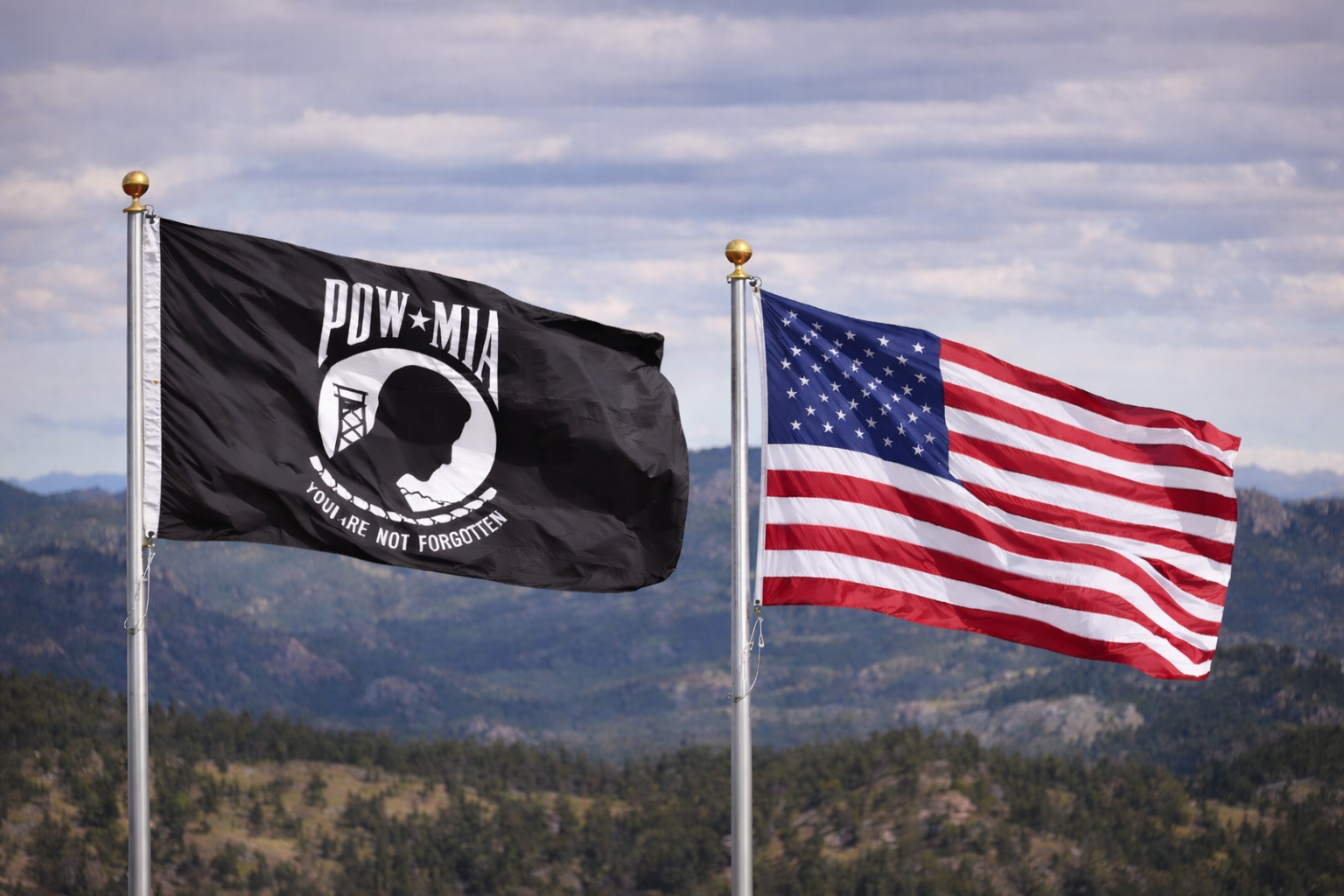
The black and white POW MIA flag has become a lasting symbol of that sacrifice. With the silhouette of a service member, a guard tower and the words “You Are Not Forgotten,” the flag serves as a national reminder that the mission does not end until every service member is accounted for. It is one of the few flags authorized to fly alongside the American flag on federal property, a reflection of its importance.
In western South Dakota, that message carries deep meaning. With Ellsworth Air Force Base just outside Rapid City, many local families understand the realities of military service. Airmen train, deploy and serve around the world, and their families share in that sacrifice. POW Recognition Day is not just history here, it is personal.
South Dakota has a long tradition of military service, and that includes those who were taken prisoner in conflicts from World War II to more recent wars. Their experiences are a reminder of the risks service members accept and the strength required to survive captivity. Their stories are not always widely told, but they remain an important part of the nation’s history.
Today, honoring Prisoners of War can be simple but meaningful. Flying the POW MIA flag, attending a local ceremony or taking a moment of silence are ways to recognize their sacrifice. Listening to and sharing the stories of veterans also helps keep their experiences from being forgotten.
For many, the most important act is awareness. Understanding what prisoners of war endured and acknowledging their service ensures their sacrifices are not overlooked with time.
As the POW MIA flag flies today, it stands as more than a symbol. It is a promise to those who were held captive and those still unaccounted for that they will not be forgotten, and that their service will always be remembered.


