
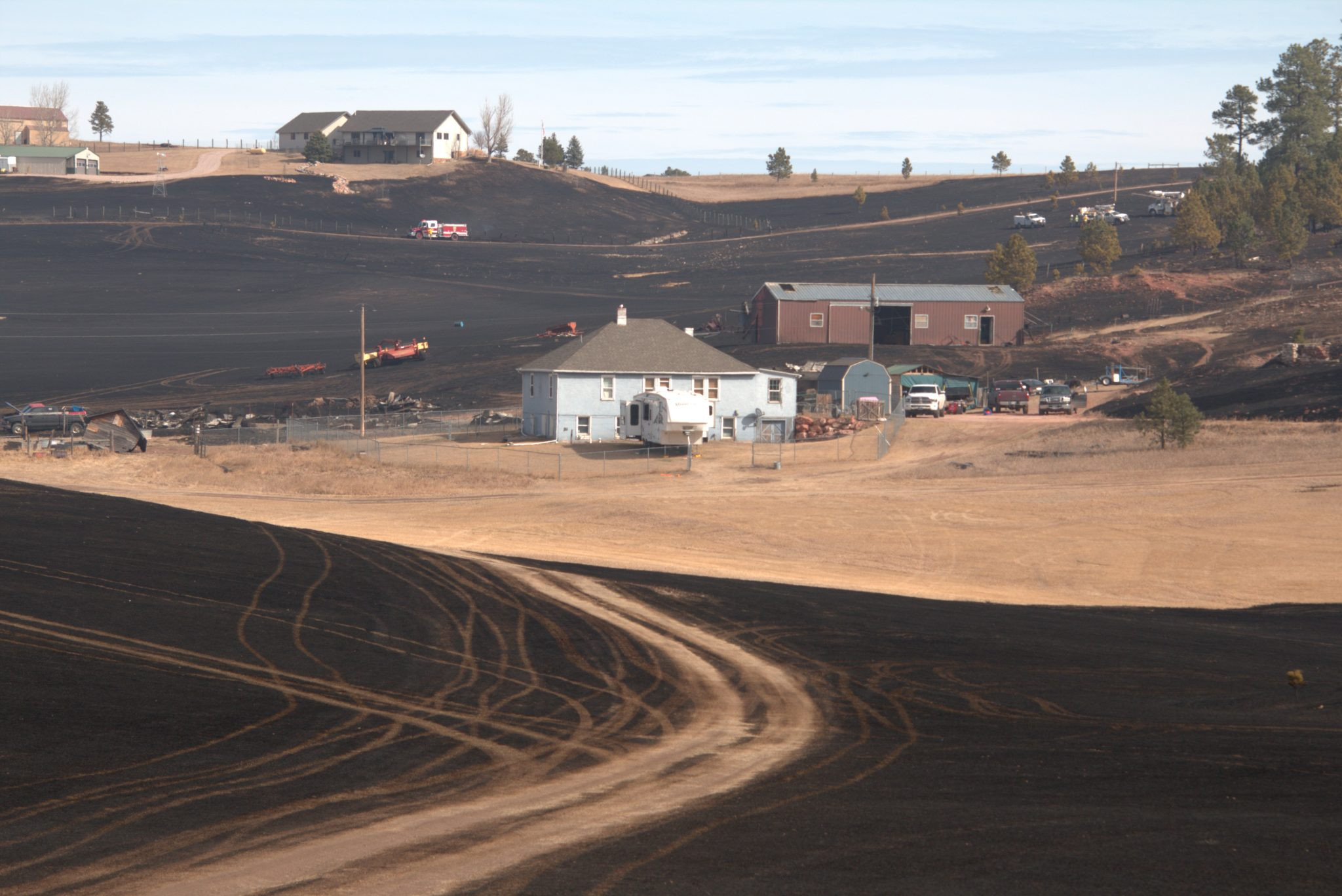
BLACK HILLS, SD — With relative high temperatures set to continue on to the months ahead, fire resources in the Black Hills area have been working tirelessly to fight the variety of large-scale vegetation fires whose flames have been fed by wind and an abnormally low moisture, and prepare for the uncertain season ahead as we inch ever closer to the 250th anniversary of the United States. These same firefighters and fire experts say to expect brutal months ahead, and ask the public for help in stopping blazes before they start.
Risk and Preparation
“I think the key takeaway right now is from a fire perspective and from a fuels perspective, we are record dry; explosively dry,” said Darren Clabo, State Fire Meteorologist, who credits the dry season – the third driest on record, comparable to 2012’s dry season – to many factors, but lays blame primarily on fuel dryness due to lack of precipitation. This dry weather appears to follow in line with anomalously high temperatures across much of the Western US, a sudden spike which has been noted by Clabo and researchers for five decades now. “If you look at snowpack and the Rocky Mountains, it’s all record low,” said Clabo, “That’s challenging to even think about,” citing a lack of moisture in reservoirs as a worry, an issue already hitting Rapid City in light of water restrictions issued on Monday.
Clabo’s outlook was, in his words, “Brutal,” and other fire resources well understood the risk, and are doing their best to prepare physically and mentally for what lies ahead. “We are expecting an active fire year,” said Jeni Lawver, Fire PIOC for the Black Hills Forest Service, “Going into fire season, we’re focused on making sure our resources are positioned where they’ll have the greatest impact”.
Lawvers’ words reflected many of those asked about the season ahead, focusing on the importance of vigilance and interagency communication in efforts to effectively utilize the regions’ limited immediate resources, as well as community outreach to prevent the initial ignition and rapid spread of fires as we’ve seen at both the Qury and Coyote Flats fire.
Public Preparedness
“We’d like everybody just to take a little bit of time and clean their gutters out, cleanup the leaves, pine needles around their houses and that just helps us as firefighters” said RCFD Chief Brian Povandra, who echoed advice given by all other experts on the subject, with it all coming down to keeping property clean as best as people can. Many additionally urged caution around fire hazards as we enter the season, citing chains on RVs as potential sources of ignition as well as encouraging locals to avoid lighting their own fireworks.
Lastly, all experts urged preparation as a key aspect for the public. “The evacuation framework that we use in Pennington County is the ‘Ready, Set, Go’ program.” said Adam Davis, Deputy Director of Pennington County Emergency Management, who encouraged individuals to remain aware of fire risk in their area and prepared for potential evacuation orders.
While information is often relayed through wireless communications, davis additionally urges those who are in areas without regular internet or cell phone access to opt in to receive landline warnings of potential and active fire risk in their area. “the big message that we like to remind people is if we can’t reach you, we can’t warn you”.
For more information on opt-in warnings and other safety information, please visit pennco.org/publicsafetyhub


