
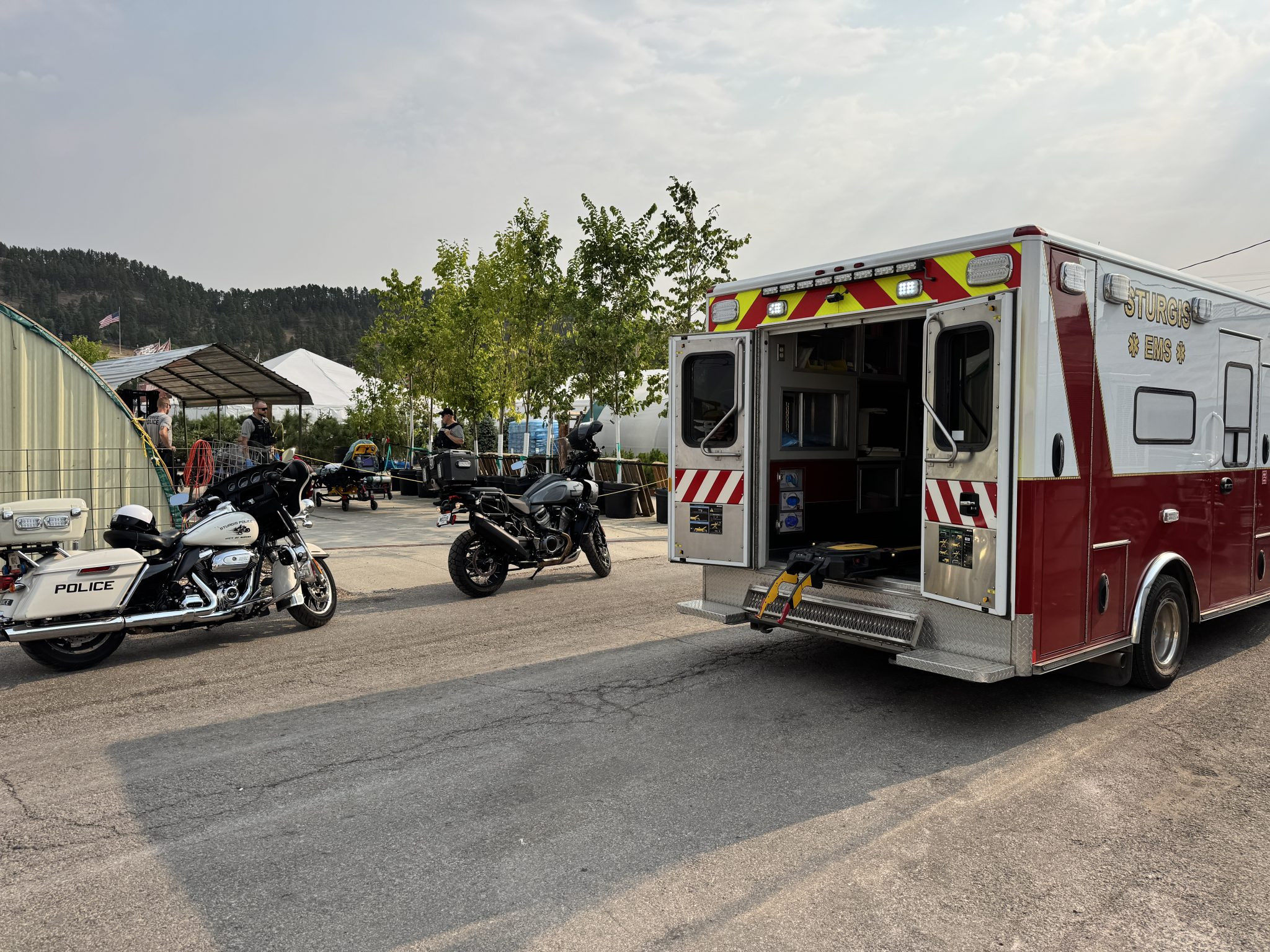
Sturgis is a town of about seven thousand people for eleven months of the year. Then August rolls around, and the population jumps toward half a million bikers, all crowding into the same streets at once. Somebody has to answer when things go wrong out there, and that job falls to Bryson Kool, the director of Sturgis Ambulance.
Kool’s crews are running about eighteen calls a day right now. Compare that to a normal Thursday in January, when the town sees five or six.
“We’re there on the worst day of people’s lives,” Kool said.
From Nebraska Vacations to Paramedic School
Kool grew up in Omaha and got his start the way a lot of paramedics do, by watching a parent do the job first. His dad volunteered as a firefighter and EMT, and Kool followed him into it at eighteen. He worked as an EMT in the small town of McCook, Nebraska, until a vacation turned into a move. He and his wife had been coming to the Black Hills for years, and when she found a nursing job in Rapid City, the decision made sense. Kool went to paramedic school here and joined Sturgis Ambulance not long after. This is his fifth year with the department, and his role as director means he decides how many rigs hit the road and where they sit.
Doubling the Fleet for Rally Week
Sturgis Ambulance keeps five rigs on rotation to spread out the maintenance. Most of the year, two of them run around the clock, covering five or six calls a day and a steady stream of transfers up to Rapid City. During rally week, four rigs run twenty four hours a day, and staffing doubles to match.
This year that meant hiring seven medics from outside the area, pulling talent from Colorado, North Dakota, South Dakota, Nebraska, and Michigan. Several work as travel medics full time, moving from one big event to the next. Local part timers pick up rally shifts on top of their regular jobs too. Kool says lighter rally crowds can actually bring more serious wrecks, since open roads let riders travel faster.
“Especially with events like these, we have a lot more traumatic injuries due to alcohol and motorcycles,” Kool said. “Especially when rally numbers are a little lower, we see more accidents because people are traveling at higher rates of speed.”
Rethinking the Map, One Side Street at a Time
Getting a rig through downtown Sturgis during rally week takes real strategy, so this year Kool changed how his crews stage their ambulances. Rigs now sit on side streets around downtown rather than waiting at the station, cutting drive time through the most congested blocks.
“We meet every morning with our staff and get ideas of what they saw the day before, what could be changed,” Kool said. “We’re constantly changing and evolving.”
That same crew pitches in wherever else help is needed. When the Bear Butte fire burned close to five hundred acres this month, several of Kool’s medics, many of whom volunteer as firefighters themselves, hauled water and checked on crews working in the heat.
Fifty-Fifty Odds and Curves That Don’t Forgive
Ask Kool whether drivers clear the road for a siren and he’ll give you the real number.
“It’s fifty fifty,” he said.
Motorcycle engines drown out sirens, mirrors are small, and a rig running lights sometimes creeps along at twenty miles an hour through downtown traffic. Plenty of 911 calls for trouble breathing turn out to be a rider looking for a free ride back to his hotel. Kool’s crews try to find another way home for guys like that. Riders who genuinely need care get the same steady attention every time.
The hills bring sharper risks. One curve has claimed a rider two years running, dropping motorcycles roughly fifty feet down the same cliff.
“The fire department rigged up a rope system for us to get the patient up,” Kool said. “It’s quite the challenge.”
Crews often reach patients by cutting through a homeowner’s backyard to get below the wreck instead of climbing down from above.
The hardest calls stay with people longer than the day they happen. Sturgis Ambulance brings in a doctor for critical stress debriefings after tough runs, working alongside law enforcement and fire crews who responded too.
“It seems like several days after is when it starts to hit you the hardest,” Kool said.
Kool keeps that support available year-round.
“I can’t speak enough about the compassion and the care that our crews have,” he said. “They are some of the best crew members I’ve ever had.”


