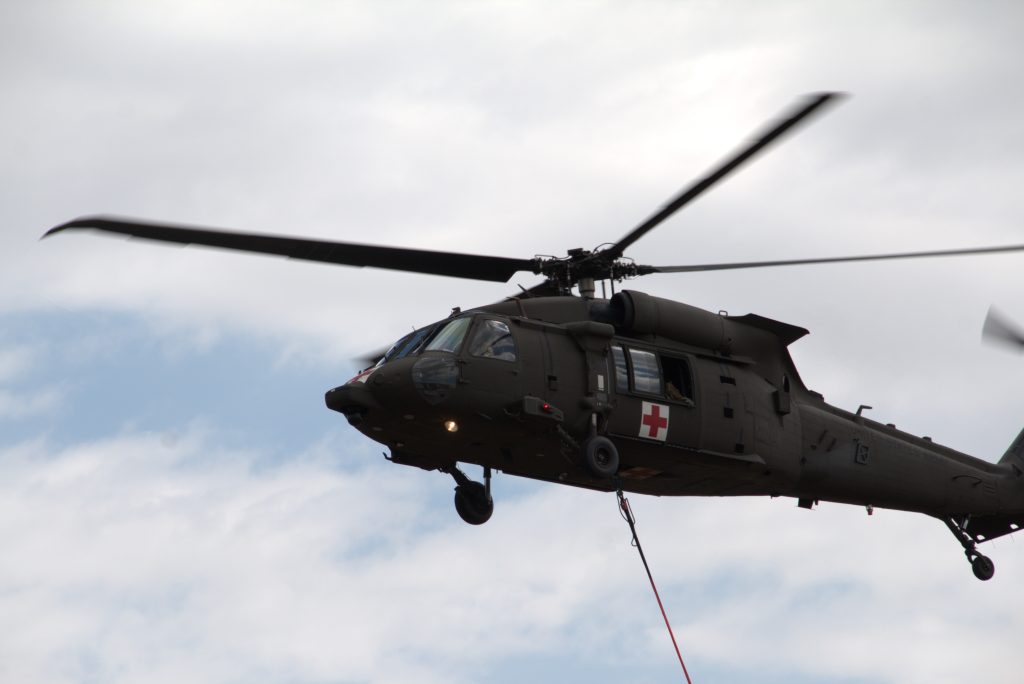
HOT SPRINGS, SD — Blackhawk Flight Crew are honing in their skills today as they complete the practical portion of fire helicopter recertification, a yearly training regimen set to prepare the national guard for warmer, drier weather.
Though this is a regular exercise for crews, this is anything but a normal season, with SD Wildland Fire’s Tony Pritzkau reporting that national guard helicopters have been called for around a half-dozen times since the start of the year in response to places such as the Qury, Murphy, and Coyote Flats fires. “it’s really important so we can help out our communities,” says Flight Paramedic Lydia Raderschad
According to Wildland Fire average initial response time from Nat. Guard crews can vary, but often takes a few hours, but helicopters like the National Guard uses can be faster to refill than single-engine aircraft employed by wildland fire once on-scene. “We rely on our National Guard quite heavily, especially during our shoulder seasons,” says Pritzkau, “This year, especially, we’ve already had a busy preseason. So we’ve actually had the National Guard out on several fires this year alone”.
Guard training for wildfire response is compressed into two days, an education-based day in which soldiers learn from experts in the field, and a practical training day in which crews practice drawing and deploying water from Pactola Resevoir onto precise locations in cooperation with ground crews. “[it] makes it easier for us to react faster to calls and be comfortable with whatever mission or fire” says Capt. Jacob Huber, Aeronautical Evacuation Pilot. Huber says that the training is a great way to get a refresher, even with all the activity local fire resources have been experiencing, and that it gives crews an opportunity to have “experience in their roles”.
“If we didn’t have the Black Hawk helicopters at our immediate disposal, I think a lot of our fires would be a lot larger,” says Pritzkau