SUMMERSET, S.D. – One year after the installation of Flock surveillance cameras in Summerset, dozens of city residents packed the City of Summerset’s regular commission meeting to express their concerns over the watchful eyes of the increasingly controversial law enforcement tool.
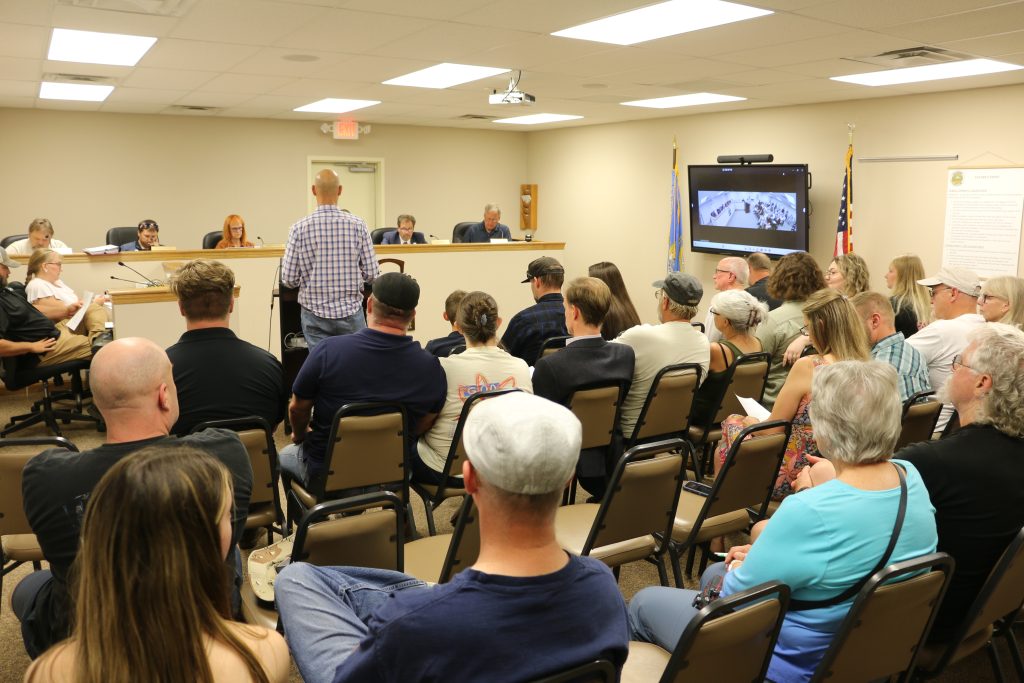
Thursday, about 50 people packed the room at the City of Summerset commission meeting to discuss Flock automatic license plate readers (ALPRs) in the small town between Black Hawk and Piedmont.
Automatic license plate readers are most often by law enforcement to identify vehicle makes, models and license plate information and specific features like toolboxes, bike racks or bumper stickers.
Flock was introduced to Summerset following community discussions in 2023 about the uptick in property crimes and residents’ complaints to the police department.
Rich Nasser, who assumed the role of Summerset Chief of Police in 2023, said addressing those concerns focused on bringing two things to Summerset: quality officers and Flock cameras.
Five cameras were installed in Summerset in July 2025.
Since the introduction of the stationary ALPRs that year, rates of vehicle burglaries, residential burglaries and stolen vehicles have decreased dramatically.
“One of the tools I introduced to the commission was stationary LPRs,” Nasser said. “We went live with Flock safety in May ‘2025 and it has been very successful for us here in Summerset.”
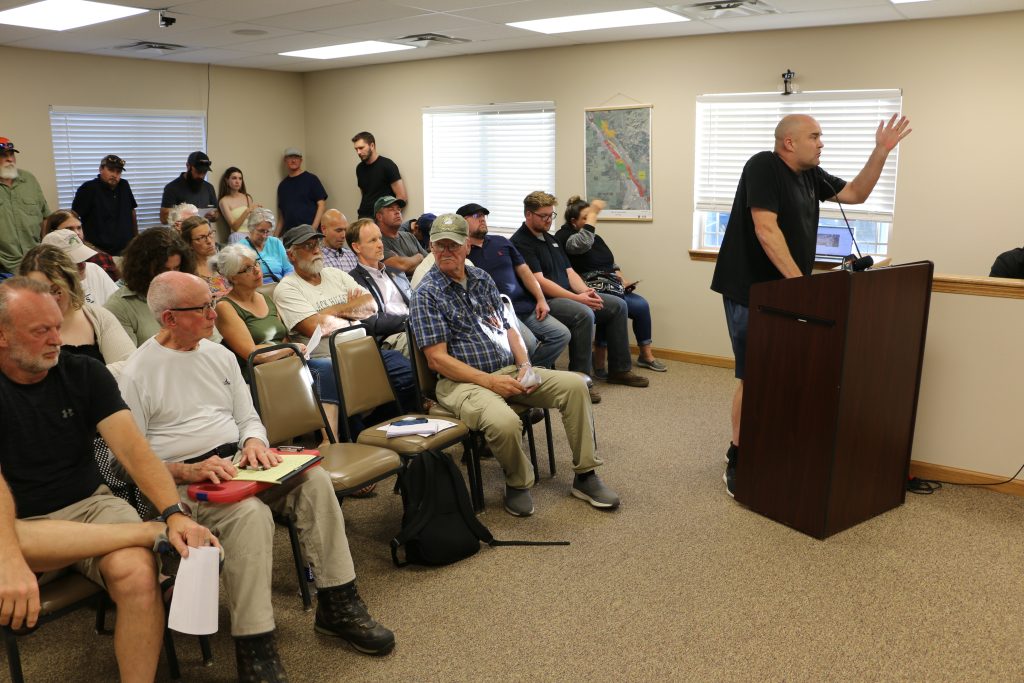
A Summerset resident addresses the City of Summerset Commissioners Thursday night.
While there was support in the crowd for the Flock system as an aid to law enforcement, generally resident concerns over the ever-present cameras varied from privacy issues, how the information gathered would be used, to vulnerabilities in the Flock system itself.
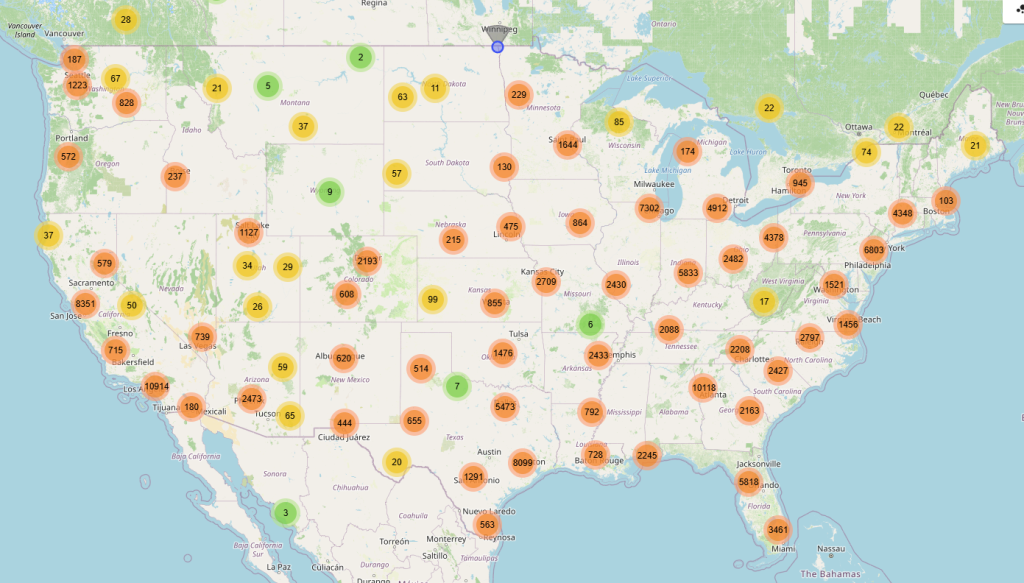
There are more than 130,000 automated license plate reader cameras in the United States operating in more than 5,000 communities – Flock being one of the major brand names that controls most of the market.
Privacy was a primary concern during the discussion. One resident said Flock facial recognition and people tracking is only a software push away.
“As with any technology we are concerned about what the future of that technology is,” said a Summerset resident. “From an altruistic standpoint, Flock is a great idea until humans get involved. And then the over 70 officers and public officials to date who have been fired or prosecuted, jailed, for what they’ve used the cameras for comes to light and that puts a stain on something that has a legitimate use.”
Nasser said Summerset Police Department had guardrails in place to prevent misuse of the images captured by the Flock system.
“It is sad that there are (some officers) across the U.S. that violate this, they violate their oath and misuse LPR technology,” Nasser said. “They’re ruining a good tool for law enforcement when it’s used correctly.”
There’s no question the Flock cameras gather detailed information. Nasser shared images the Flock system captured – compared to grainy images of older systems – which served as an aid to law enforcement in solving crimes. Success stories, he said, were being shared nationwide.
“Putting a camera up gives people a sense of security but it’s very difficult for law enforcement to take that video evidence and actually make a case out of it,” Nasser said. “LPRs have given us a lot of video that we’re able to prosecute these individuals, put them in jail, and make convictions hold.”
The Flock camera discussion has reached several communities in South Dakota. In Aberdeen, residents spoke out against the city’s discussion about the use of the license plate reader systems which lead the council there to say the cameras would not be used there. And In Codington County, cameras have been temporarily removed due to vandalism. Sioux Falls and Rapid City both have the license plate reader technology in the communities.
South Dakota Newswatch reports that some local law enforcement agencies in South Dakota are pulling back on the use of Flock cameras, and the state attorney general is drafting legislation that would put limits on their use in the state.
The legislation would be the first of its kind in the state. And it would add South Dakota to a small group of states with laws dictating how the ALPR technology can be used by police departments and other organizations.
South Dakota Sen. John Carley, District 29, told the commissioners Thursday there were a number of cities considering removing Flock cameras, noting the considerations of privacy versus security.
“I do hope ultimately you will consider removing Flock and similar heavy surveillance cameras to protect our citizens from abuse of their 4th Amendment right to privacy and being searched,” Carley said.
The five Flock ALPRs cost Summerset $22,500 annually. The information gathered is deleted after 30 days, Chief Nasser said the data is available to 10 other law enforcement agencies in South Dakota.
No action was taken by the commissioners at Thursday night’s meeting. The Flock system will be considered as part of the City of Summerset’s 2027 FY2027 budget process.
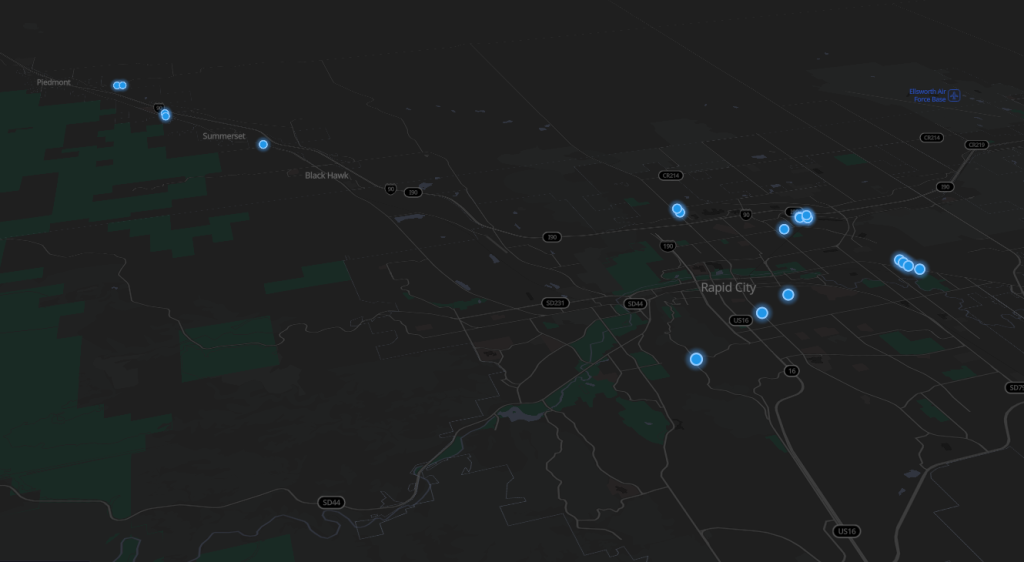
Automatic license plate readers can be found in Rapid City, Summerset and other communities in South Dakota.
Nationwide, below, the automatic license plate reading cameras reach every state. (deflock.org)