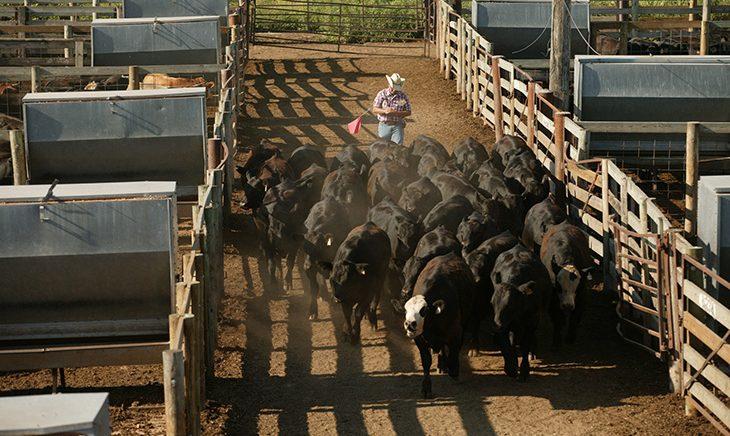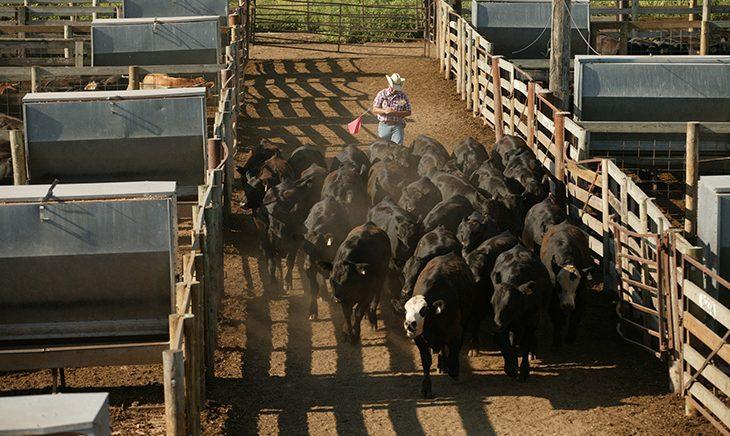
Thousands of fed cattle, scheduled to leave commercial feedlots for processing, have nowhere to go.
DODGE CITY, KAN. – The dusty air of southwest Kansas hung heavy, smelling faintly of dry earth, cattle feed, and a sudden, sharp anxiety. For months, the talk around the sale barns in Dodge City and Liberal had centered on high feed costs, tight cattle inventories and imported beef.
But over the last week, a new, volatile variable had entered the equation: Immigration and Customs Enforcement (ICE) activity sweeping through the beef processing region.
Late last week the Kansas Livestock Association, the Oklahoma Cattlemen’s Association, and the Texas Cattle Feeders Association said the Immigration and Customs Enforcement operations had what they called a “massive chilling effect” on the legal, documented, and skilled workers that keep the supply chain moving.
While federal officials maintained that the operations were targeted and not traditional worksite raids, the effect on the local workforce was immediate. Fearing sweeps, waves of plant employees—many of them critical cogs in the high-speed disassembly lines of the area’s massive beef-packing plants—stayed home.
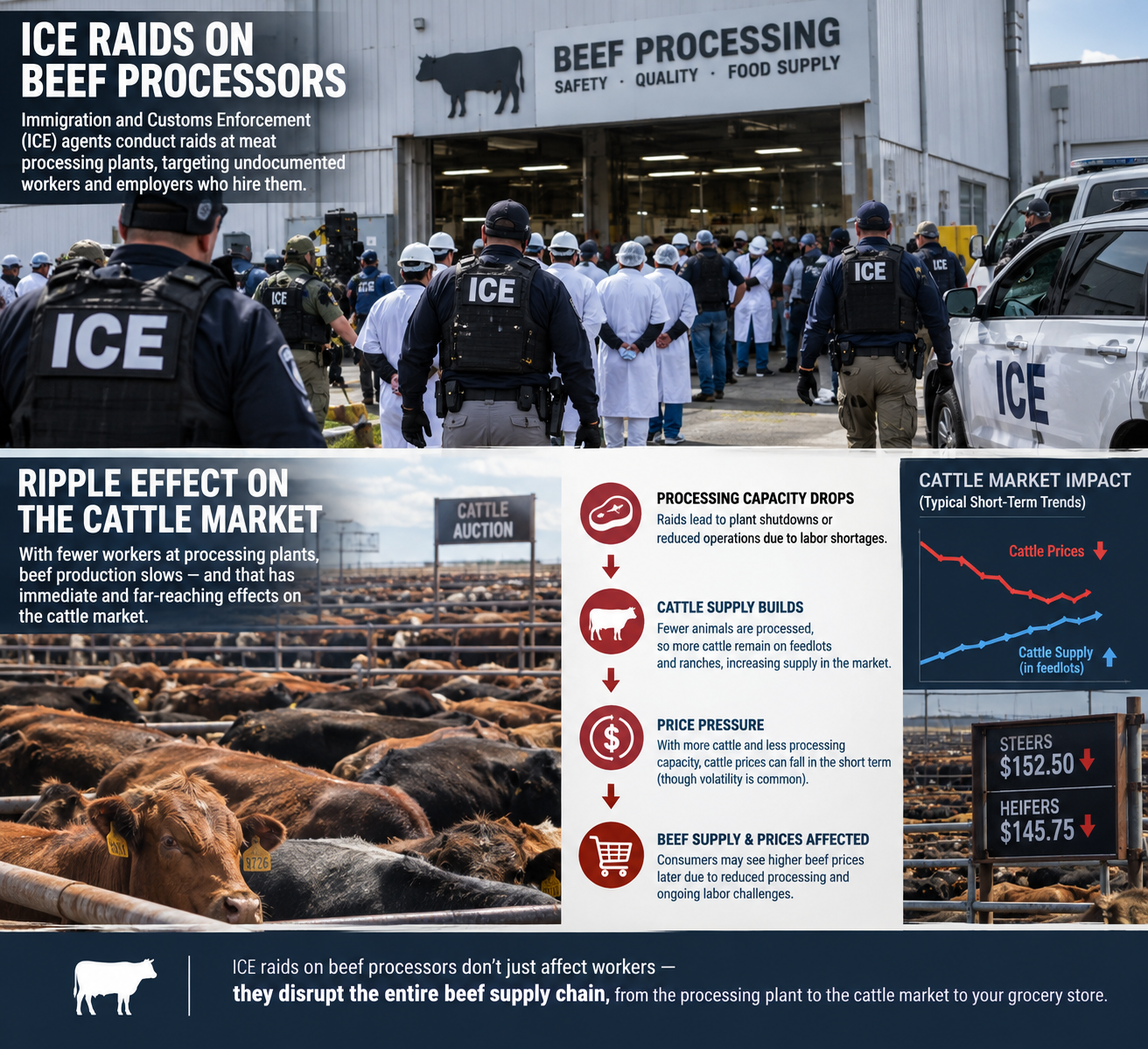
USDA data showed that national and regional cattle slaughter fell significantly below expected levels. Daily slaughter numbers dropped to roughly 100,000 head, and further fell to approximately 94,000 head mid-week. By Thursday, Sept. 24, USDA figures reported national cattle slaughter at 90,000 head, representing a drop of 17,000 head compared to the same period a week prior.
For cattle producers, the ripple effect was swift.
Industry representatives and reports have noted that some producers faced immediate negative impacts—with reports of cattle losing value on a per-head basis in the cash market because immediate buyer demand dropped while packing houses struggled with labor shortages.
Because packing plants processed fewer cattle, thousands of animals missed their scheduled processing windows. This left feedyards and ranchers stuck holding cattle longer, forcing them to continue paying for feed, housing, and maintenance costs.
CME cattle futures saw initial sharp disruptions followed by rebounds as the market tried to price in the labor bottlenecks and shifting slaughter numbers.
The Processing Bottleneck
At the heart of the crisis is the delicate, finely timed choreography of the American beef supply chain. According to USDA reports, cattle slaughter on Monday was down 10,000 on the week and last Friday’s slaughter was down 14,000 on the week.
Late last week the Kansas Livestock Association, the Oklahoma Cattlemen’s Association, and the Texas Cattle Feeders Association said the Immigration and Customs Enforcement operations had what they called a “massive chilling effect” on the legal, documented, and skilled workers that keep the supply chain moving.
Thousands of fed cattle, scheduled to leave commercial feedyards for processing, had nowhere to go. They sat in pens, continuing to consume expensive grain and hay day after day. For ranchers and feedyard operators, every day a finished steer stays on the yard translates directly into lost margins and mounting overhead.
Jackie Moore with Joplin Regional Stockyards in Missouri told Brownfield last week’s slaughter slowdown is problematic. “Last week they had the reported ICE raids in some of the packing plants in Dodge City and caused some turmoil,” he says. “The fats I had, they canceled them.”
A Market Caught in the Crosshairs
The sudden slowdown threw livestock markets into a temporary tailspin. Cash cattle prices faced downward pressure because processors, operating with severely depleted skeleton crews, pulled back on buying. Producers found themselves holding heavy, market-ready cattle with fewer buyers bidding for them.
Yet, paradoxically, consumers aren’t expected to see relief at the grocery store checkout. With baseline meat supplies already historically tight and retail beef prices hovering near record highs, industry analysts warn that the processing bottlenecks will likely squeeze the supply side even further. Packers unable to run at full speed mean fewer boxed beef cuts reaching distribution centers, setting the stage for even steeper prices at the meat counter down the road.
Fractured Communities and Growing Concern
Agricultural associations across Kansas, Texas, and Oklahoma quickly mobilized, issuing joint statements condemning the uncoordinated federal actions. They pointed out that the disruption stretches far beyond the packing plants, threatening transport hubs, dairies, grain suppliers, and rural community stability.
In towns like Dodge City, community organizers spent their days delivering groceries to families too terrified to venture outside. Meanwhile, local producers—many of whom are stalwart defenders of strict border enforcement—found themselves in a bitter paradox, watching federal policies collide head-on with the fragile economic reality of agricultural labor.
As the dust settles over the feed lots of the High Plains, the market remains on edge. Producers are left waiting to see how quickly processing lines can return to full speed—and hoping that the temporary gridlock doesn’t permanently damage an already strained supply chain.
The collision between federal immigration enforcement and the agricultural economy has put High Plains lawmakers in a difficult political bind. Representing states that overwhelmingly favor strict border security, these politicians suddenly found themselves fielding frantic calls from local cattlemen, feedyard operators, and rural chambers of commerce facing economic gridlock.
Calls for Coordination and Communication
The tension was perhaps most visible in Kansas, where prominent federal lawmakers publicly pressed the administration for better coordination.
Senator Roger Marshall (R-Kansas), a staunch ally of conservative immigration policies, took to social media to voice his displeasure. He emphasized that when ICE operates in regions like southwest Kansas, it “needs to coordinate with our local law enforcement.”
Marshall and other regional representatives pointed out that the lack of communication and uncoordinated sweeps caused mass disruptions and a “chilling effect”, frightening away even legal, documented workers who feared getting caught in the crossfire.
The Conservative Political Paradox
For many High Plains politicians, the situation highlights a long-standing conservative paradox: balancing a platform of aggressive interior immigration enforcement with the economic reality that the region’s multibillion-dollar meatpacking sector heavily relies on immigrant labor.
Lawmakers like Kansas Senator Jerry Moran reportedly engaged directly with Department of Homeland Security officials, seeking assurances about the scope of the operations. While federal officials maintained that targets were strictly limited to individuals with specific administrative or criminal warrants, local stakeholders argued that the reality on the ground looked like broad, indiscriminate sweeps.
Regional agricultural associations—representing thousands of ranchers across Texas, Oklahoma, and Kansas—pushed their congressional delegations to intervene. They argued that slowing down packing plants during peak marketing windows threatens rural financial stability and artificially inflates consumer prices at a time when voters are already sensitive to inflation.
Ultimately, High Plains lawmakers have found themselves walking a fine political tightrope: attempting to support border security priorities while desperately trying to prevent federal actions from strangling the region’s foundational livestock economy.
Moore said the prolonged disruptions to the supply chain can impact profitability for producers, similar to what happened during the COVID-19 pandemic. He told Brownfield, “The packers made a fortune out of that deal because boxed beef went to all-time highs,” he says. “It wasn’t good for anyone in the industry except the packers.”