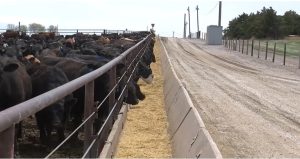
WASHINGTON, D.C. – The USDA released its April 2026 Cattle on Feed report on Friday, April 17, 2026. The data confirms a continuing trend of historically tight supplies, with both placements and marketings hitting their second-lowest levels for the month of March since record-keeping began in 1996.
While the figures were largely in line with analyst expectations, they underscore a domestic cattle industry that is still struggling to find the “bottom” of its inventory cycle.
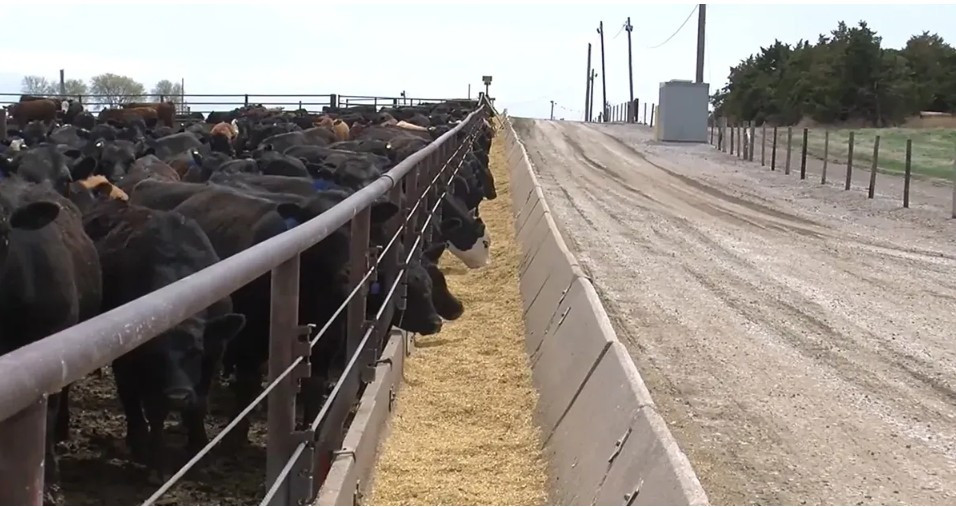
Cattle and calves on feed for the slaughter market in the United States for feedlots with capacity of 1,000 or more head totaled 11.6 million head on April 1, 2026. The inventory was 1% below April 1, 2025, USDA NASS reported on Friday.
The inventory included 7.26 million steers and steer calves, down slightly from the previous year. This group accounted for 63% of the total inventory. Heifers and heifer calves accounted for 4.32 million head, down 1% from 2025.
Placements in feedlots during March totaled 1.71 million head, 7% below 2025. Net placements were 1.66 million head. Placements were the second lowest for March since the series began in 1996. During March, placements of cattle and calves weighing less than 600 pounds were 320,000 head, 600-699 pounds were 250,000 head, 700-799 pounds were 435,000 head, 800-899 pounds were 474,000 head, 900-999 pounds were 170,000 head, and 1,000 pounds and greater were 60,000 head.
Marketings of fed cattle during March totaled 1.63 million head, 6% below 2025. Marketings were the second lowest for March since the series began in 1996.
Other disappearance totaled 50,000 head during March, 9% below 2025.
The most bullish signal in the report is the 7% drop in placements compared to March 2025. At 1.71 million head, this is the second-lowest March placement total in 30 years.
A lack of available feeder cattle is the primary culprit. Tightening supplies in the Southern Plains and Midwest, combined with a lack of Mexican feeder imports, have left feedlots struggling to fill pens.
The decline was felt across almost all weight classes, but particularly in mid-range calves (700–899 lbs), suggesting that the “pipeline” for late-summer and autumn slaughter will remain thin.
According to DTN Livestock Analyst ShayLe Stewart, traders will likely glance over the report and be pleased to see that both the total number of cattle on feed and the total number of cattle placed came in below pre-report estimates.
Specially, in terms of the placement data, it’s worth noting that of the major feeding states, the year-over-year breakdown is as follows: Colorado placements in March were down 7% compared to a year ago, Iowa’s placements for March were up 1% compared to a year ago, Kansas’ placements for March were down 5% compared to a year ago, Nebraska’s placements for March were down 15% compared to a year ago, and Texas’ placements for March were also down 15% compared to a year ago.
“Friday’s Cattle on Feed report was chock full of information, as not only did the three main usual columns of the report highlight mostly bullish content, but this report also highlighted the steer and heifer breakdown of the total number of cattle on feed,” Stewart said following the report’s release.
The quarterly breakdown included in this report provides a look at the steer/heifer ratio, which is the “canary in the coal mine” for herd rebuilding.
Heifers on Feed: 4.32 million head (down 1% from 2025). Steers on Feed: 7.26 million head (down slightly).
Heifers still represent roughly 37% of the total inventory on feed. While this is a slight decrease, it indicates that producers are not yet aggressively holding back heifers for breeding. Herd expansion remains “on hold” as the industry waits for better pasture conditions or more stable economic signals