
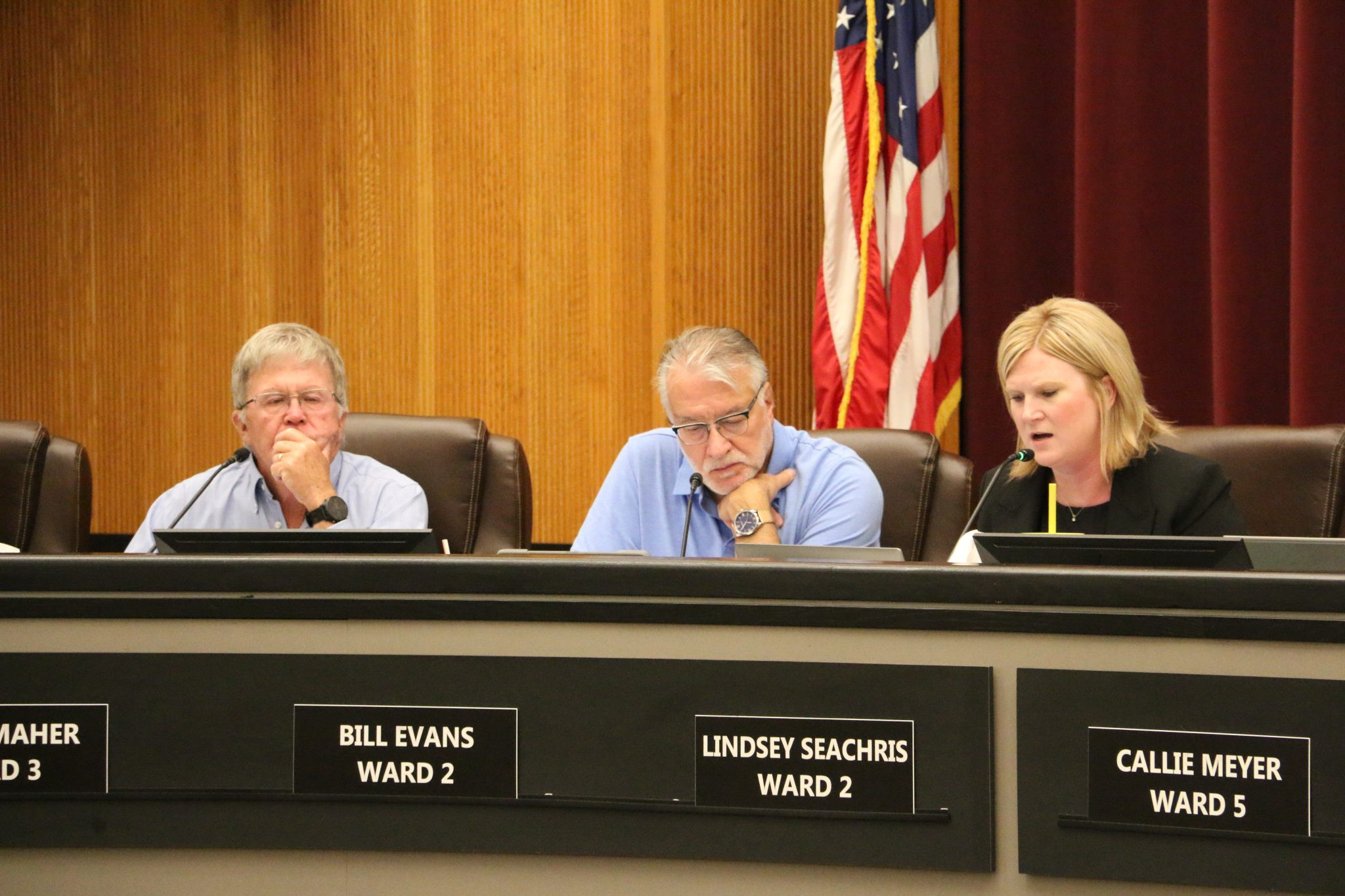
RAPID CITY, S.D. – The Rapid City Common Council addressed several issues in the proposed Rapid City 2027 budget Wednesday night during the first reading of the proposed budget.
Last month, Rapid City Mayor Jason Salamun proposed a $312.3 million 2027 budget for the city of Rapid City – down 7.4 percent or $25 million from the 2026 proposed budget of $337.3 million.
With a handful of changes Wednesday, council members reduced the total budget expenditures by $1,021,000 – reducing spending by $400,000 and taking the state-approved consumer price index (CPI) increase on property taxes generating another $595,000, which would increase property taxes by 2.5 percent.
City Finance Director Dan Ainslie said in the mayor’s proposed budget $3.5 million of undesignated cash (savings) was used to balance the budget; after the council’s actions Wednesday that will be reduced to $2.5 million.
Among the changes approved by the Council:
• Reduce the City Council’s contingency fund budget by $700,000, utilizing the savings for further actions and reducing the use of undesignated cash for the 2027 budget
• Approve an additional planner and code enforcement officer for the Community Development Department
• Reduce the mayor’s office budget by $100,000
• Reduce allocation for an Independence Day 2027 observance from $500,000 to $100,000
• Allocation increases to the Canyon Lake Activity Center and the Minneluzahan Senior Center with an additional $50,000 to each entity
• Allocation of an additional $182,523 from undesignated funds to enhance Rapid Transit System driver compensation
• Allocation of an additional $124,000 to fully fund four new FTEs for the parks department for the entire year
• Allocation of an additional $120,000 for the parks department for professional services
• Additional allocation of $7,423 for Emergency Planning
To allow for public comment on the changes made during the special meeting Wednesday night, a motion was approved to move the first reading of the budget to the regular City Council meeting on Sept. 8.
The CPI is designed to help cities manage the increasing costs of providing public services. Not raising rates for one year means the city permanently loses that revenue baseline which could create future budget issues.
Rapid City, years ago, adopted a resolution mandating that if the city wanted to take the state-approved 2.5 percent CPI there had to be a council vote. Ainslie said Rapid City hadn’t taken the optional CPI for several years which has been partially responsible for keeping Rapid City’s municipal mil levy low.
In the mayor’s proposed budget, the CPI was not taken.
“The mayor looked at it and said the budget doesn’t require additional property taxes because our sales taxes have increased so much,” Ainslie said. “Our sales tax revenue has increased faster than inflation – that’s because our population has been growing and also because we’re a center for tourism, we’re a center for events.”
On Wednesday, the council voted to take the CPI for the 2027 budget, bringing in $595,000.
“I’m not about higher taxes I just think this is an opportunity,” Councilman Kevin Maher said. “If you look at the 18 largest cities in South Dakota we have the second lowest mil levy of any city.”
The motion passed 7 to 3, with John Roberts, Lindsy Seachris, and Stephen Tamang voting against it.
The city budget undergoes two readings for approval prior to September 30 per state law. The council can provide approval at a special session or in the course of a regular council meeting. On Wednesday, the council voted to move first reading from last night’s special session to the upcoming council meeting on Sept. 8 (Tuesday rather than Monday due to Labor Day).


