
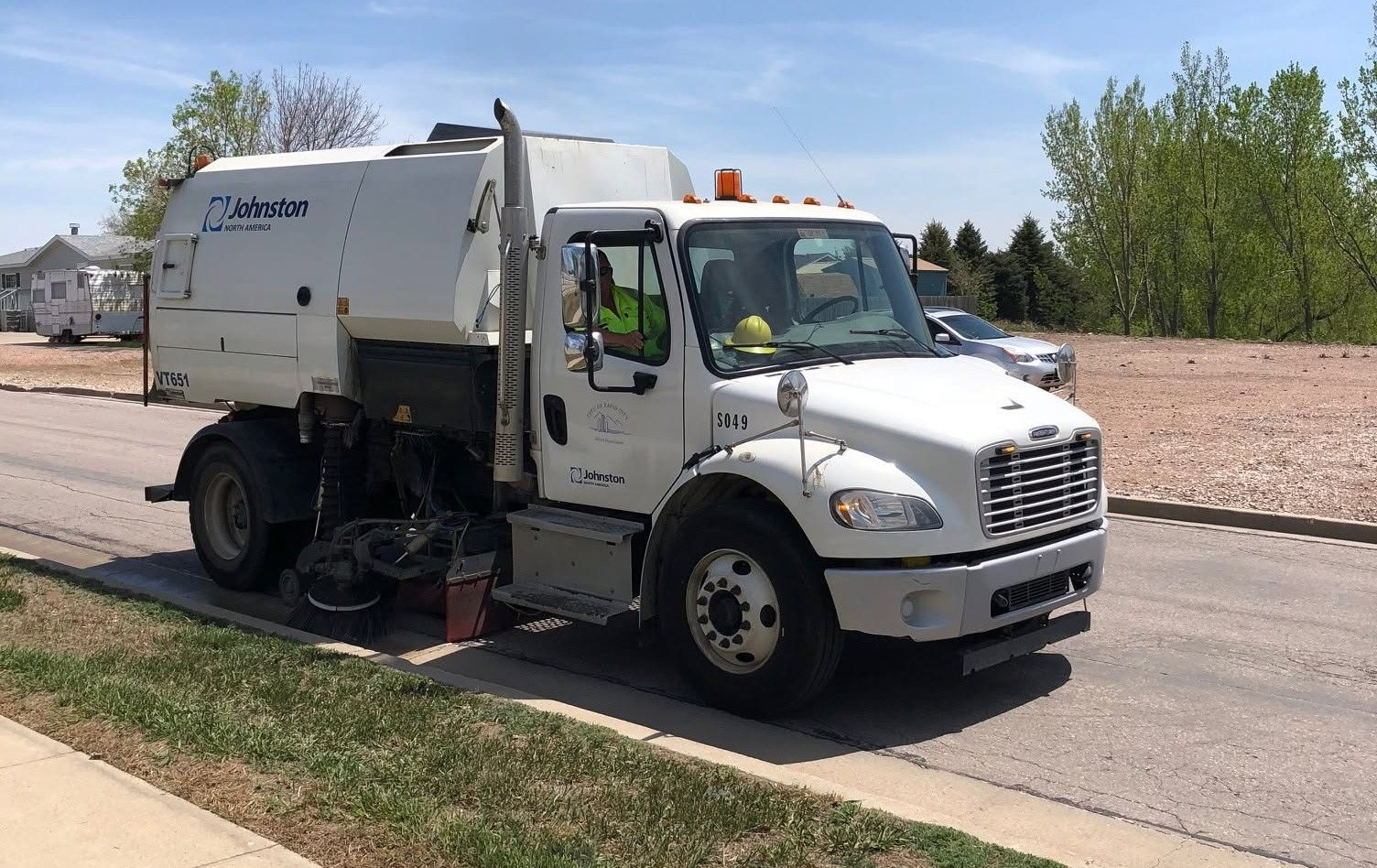
RAPID CITY, S.D. — Rapid City Streets Division crews swept every city street for a second consecutive year during May, collecting more than 311 tons of debris while surpassing additional maintenance goals along the way.
The annual initiative, known as “Sweeps Month,” challenges crews to clean every street in Rapid City during May by removing gravel, dirt, rock and other debris left behind from winter weather and daily traffic.
Using a fleet of 10 street sweepers, crews covered 3,595 miles of city streets during the month and logged more than 704 engine hours while collecting material from roadways. The 311 tons of debris gathered during the effort is equivalent in weight to nearly 48,000 armadillos, more than 12.8 million common frogs or more than 62,000 domestic cats.
City Streets Superintendent Jesse Rieb praised the effort, saying crews take pride in the challenge each year. “It was a very busy month and the crews had a lot to show for their efforts,” Rieb said, adding the workers saw plenty of pavement while removing a significant amount of debris. “It was an awesome effort.”
The 2026 totals build on last year’s inaugural Sweeps Month campaign. Combined with the May 2025 effort, city crews have swept more than 7,700 miles of streets and collected nearly 700 tons of material over the two-year period.
In addition to street sweeping, Streets Division crews set a goal of filling 3,000 potholes during May. Workers exceeded that benchmark by repairing nearly 4,300 potholes throughout the city.
According to the Streets Division, Rapid City sweepers collect more than 2,000 tons of material from city streets each year. The debris includes gravel, dirt, rocks, cups, bottles, cigarette butts, paper products and other material deposited by traffic, weather events and runoff from heavy precipitation.
For safety reasons, sweeper crews typically work in residential neighborhoods during daylight hours and focus on major traffic corridors at night to reduce interactions with motorists. Material collected from city streets is transported to the Street Shop detention area on Steele Avenue, where it is dried before being taken to the Rapid City Landfill for use as cover material.


