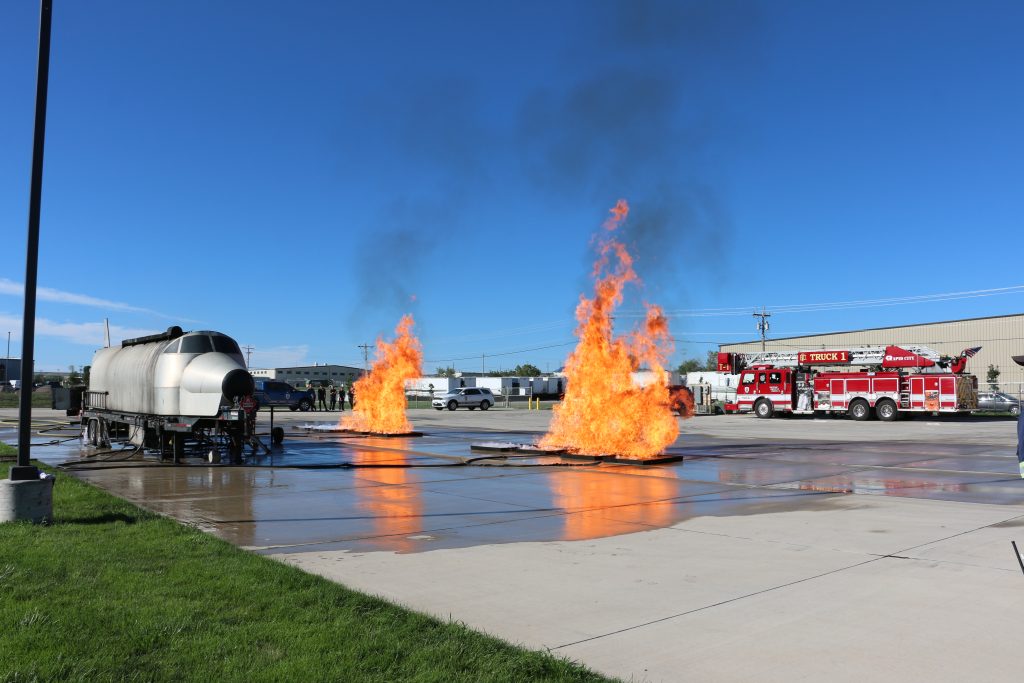
RAPID CITY, S.D. – The Rapid City Fire Department was busy Tuesday morning training for a rare yet devastating tragedy – an aircraft disaster.
Rapid City Fire Department’s annual Aircraft Rescue and Fire Fighting (ARFF) training was held at the department’s training grounds on Creek Drive.
ARFF is a specialized category of firefighting involving aircraft emergencies. In order to stay ARFF certified, it is mandated by the FAA for all airports with commercial traffic to do a live fire training once a year.
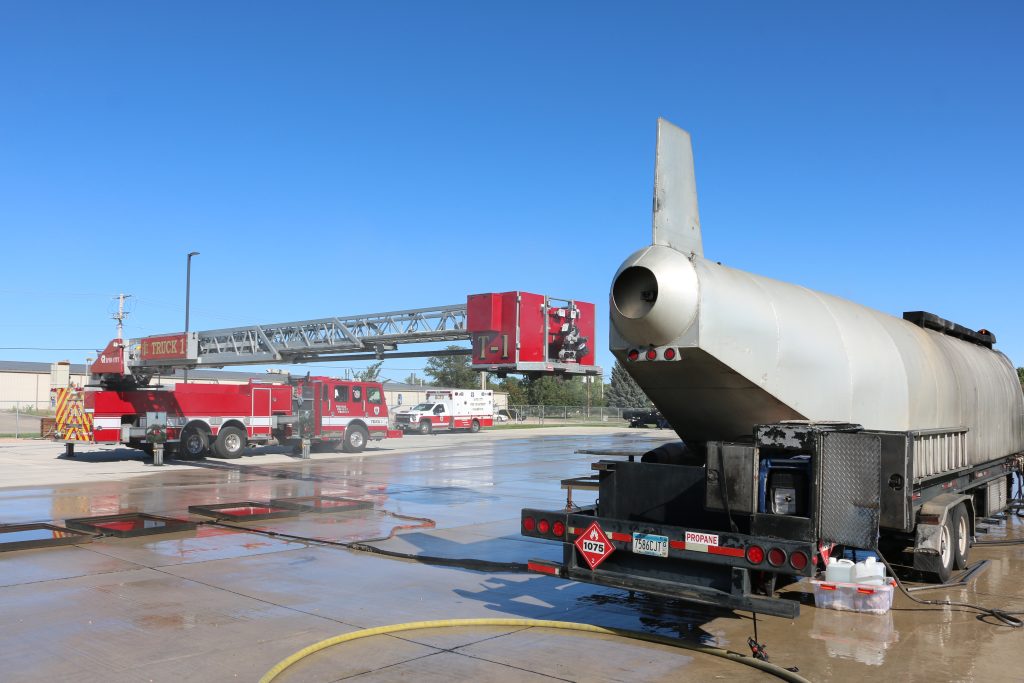
For ARFF training, firefighters utilized a live fire training prop for realistic emergency scenarios to allow responders to practice proper fire attack techniques on a simulated plane.
“What makes it unique is a situation that many of us hope we never encounter in real life but we have to be prepared for it either way,” said Neill Goodart, Rapid City Fire Department Aircraft Rescue Fire Fighting (ARFF) Battalion Chief.
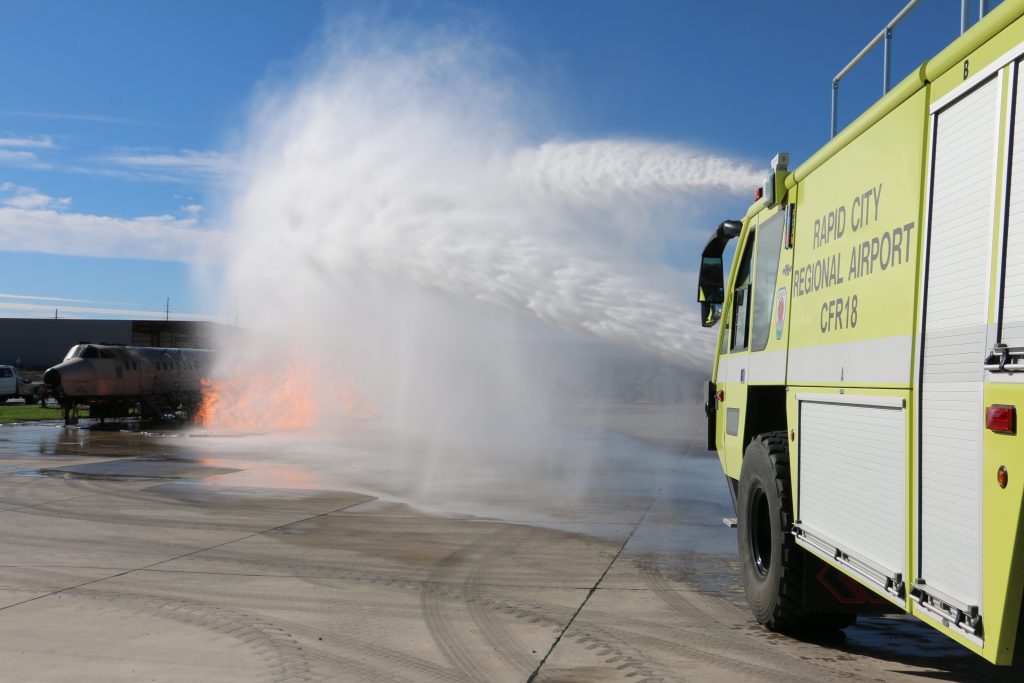
Goodart said only the 16 ARFF qualified Rapid City firefighters who drive the aircraft rescue firefighting trucks are required to be certified.
“But what we’re doing in this evolution is getting all of our staff rotated through,” Goodart said. “We wanted to get all of our staff and make sure that they all got an opportunity at this training.”
Louis Kurtz, owner ARFF Specialists, provides mobile fire simulators to every airport in South and North Dakota and the Midwest providing recertification through the FAA.
“Rapid City is very progressive in their training with the fire department and trying to coordinate and educating all of their firefighters not just the aircraft ones and getting everybody well versed in what we’re looking to accomplish,” Kurtz said. “So if anybody was to show up on any shift, they do have the baseline training and knowledge.”
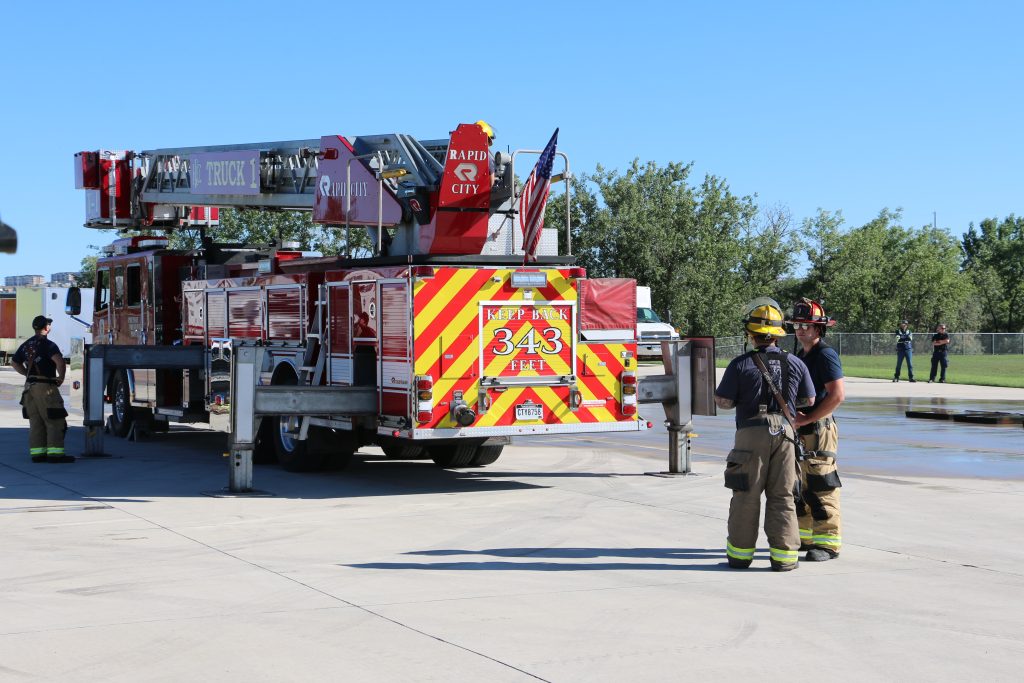
Kurtz said simulators are designed to show firefighters all aspects of aircraft firefighting and the unique hazards in poses like heavy fuels and ground fires, engine fires, wheel and break fires and other unique situations.
“How we need to tactically fight them is substantially different as opposed to a structure with a room and contents,” Kurtz said. “It’s a very realistic scenario in regard to the components of an aircraft, where they’re located, and how to fight those fires is how we’re able to incorporate the training out here exactly what they will find in real life.”
Airport disasters are rare. Statistically, 1 in 11 million people will encounter an aircraft disaster which, Kurtz said, is why training is so important.
“It’s a perishable skill,” he said. “We want to make sure the competency is always at the foremost of our ability to respond.”