
RAPID CITY, SD – A proposal to expand transit services in Rapid City could be in front of the Rapid City Council as early as next year.
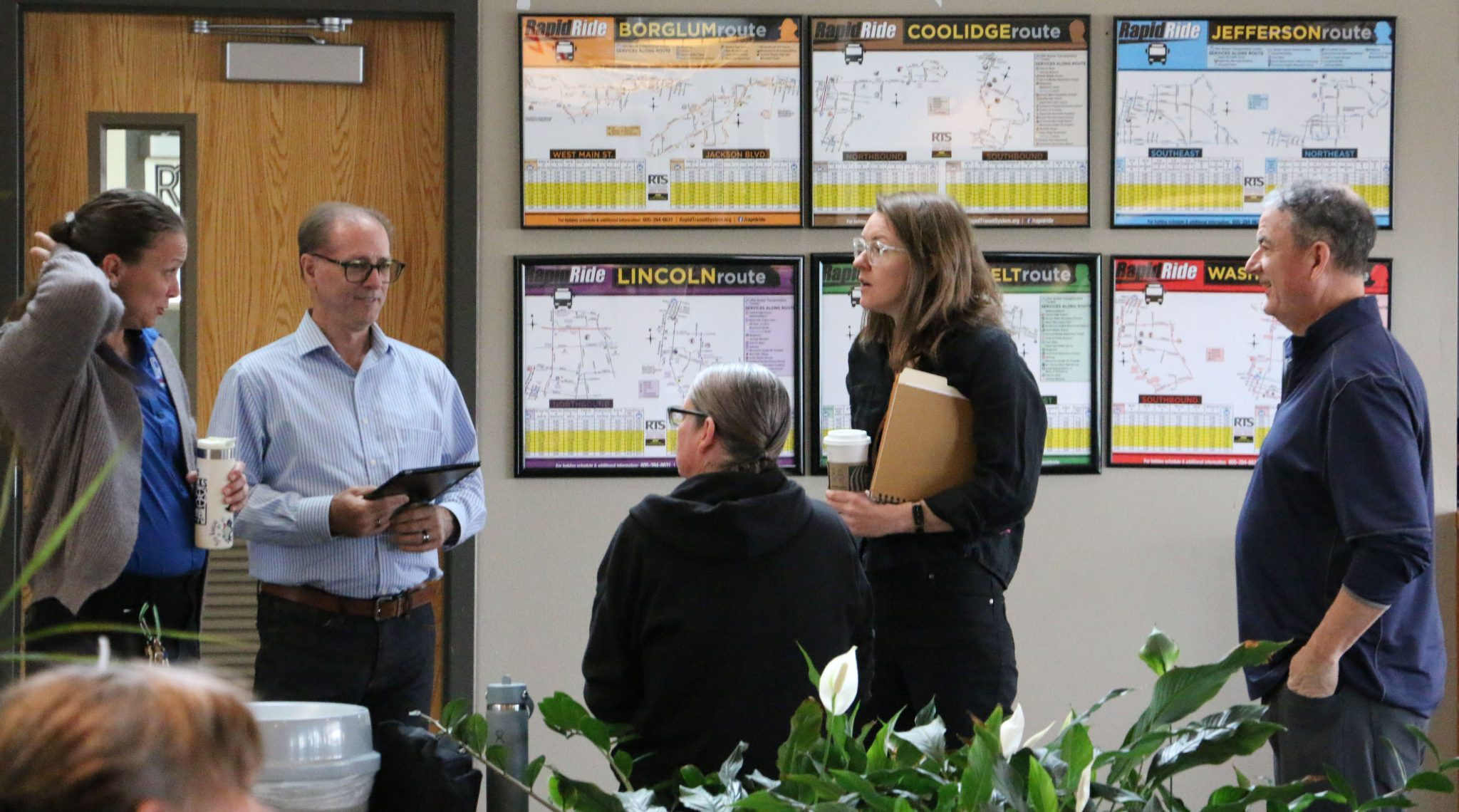
On Thursday, Rapid City Transit System (RTS) hosted a public workshop at the Milo Barber Transportation Center on Sixth Street to continue the process of gathering information to determine the feasibility of adding a micro transit service to the city’s existing Rapid Transit program.
The feasibility study will analyze ridership patterns, assess needs, identify gaps in service and, if warranted, propose options to implement a demand-based micro transit service.
“It would allow us to expand our services and fill those gaps but keep our current services that we have,” Rapid Transit Manager Megan Gould said. “It would just fill in those different areas and it’s a lot more flexible.”
Gould has been involved in the Rapid Transit System for the past decade. During that time, she said the need for additional public transportation in Rapid City has been a priority. While other priorities took precedence over exploring micro transit services, the opportunity arose to pursue the flexible transportation system.
“As our city continues to grow and our city boundaries continue to expand, we really need to look at our full picture of providing public transportation to all of the accessible areas that we can,” Gould said. “Right now, we are very limited on our service footprint. We need to make it larger.”
Micro transit services are common in other similar-sized communities and are increasingly utilized. Gould said several similar and larger markets like Sioux Falls have micro-transit services (called demand response) and those communities are being evaluated as part of the Rapid City feasibility study.
Derek Fretheim of agape Mobility is a consultant in the RTS study process identifying community needs and the feasibility of additional RTS services. For Rapid City Transit, Fretheim said he’ll come back with a report with recommendations the city could consider for micro-transit services, expense estimates, and funding opportunities.
Fretheim said he has worked on nearly 40 micro-transit service designs and feasibility studies, the vast majority of which have resulted in program implementation. Successful projects require community and leadership buy-in, funding mechanisms, and stakeholder support.
“There is a groundswell of (stakeholder) interest to help improve the quality of transportation in Rapid City,” Fretheim said. “That’s one key ingredient that really needs to be put in place.”
A micro transit program would look different in each community depending on need but generally would use vans or minibuses to provide flexible routing. Similar to ride services, micro transit may allow riders the flexibility to be picked up at locations not designated as transit stops and would be designed to fit the community’s needs and expand use.
“We would be able to access people that have no transportation right now and can’t access public transportation,” Gould said. “This would open up that opportunity for them to use public transportation within our area.”
Funding micro transit services comes from a variety of services – user fees, federal funding, grants, and local matches are the usual funding mix. Funding estimates and funding sources will be part of the feasibility study and part of the consideration of the possible program.
The idea of adding micro-transit services is still in its infancy. RTS is gathering information and working with Fretheim at agape Mobility to prepare the feasibility study. Once that’s in hand, the proposal starts the process through meetings, hearings, and finally works its way to the city council for consideration.
The goal is to have the feasibility study completed by the end of the year allowing for other meetings to take place.
If you’d like to provide input on the future of micro-transit services to Rapid City’s transportation landscape, an online survey is available from September 28 through October 19 at www.rtsgomicro.com.


