
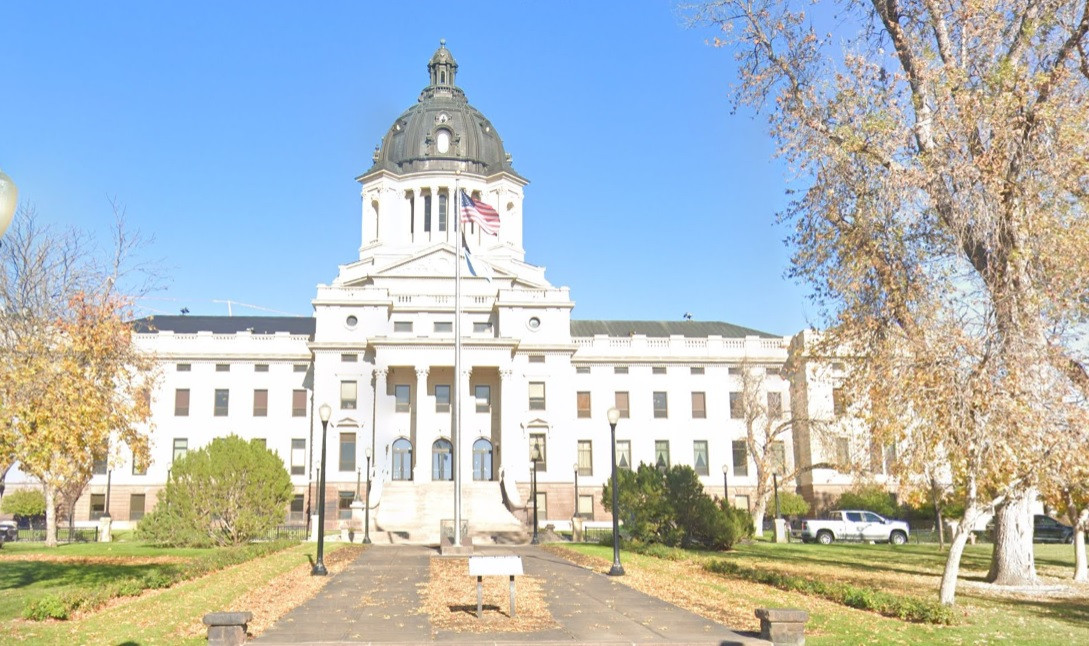
PIERRE, S.D. – A bill to loosen property tax limits for rapidly expanding local governments was defeated by the South Dakota Senate on Tuesday.
Supporters said fast-growing cities like Harrisburg and Tea are being financially starved by a cap passed just last year. Opponents said the bill would have gutted the only meaningful property tax relief South Dakotans have received in years — before it even took effect.
SB 97, sponsored by Sen. Randy Deibert, R-Spearfish, failed 18-16 because of requiring a two-thirds majority for tax levy increases. One senator was excused.
The bill, as amended on the floor, would have allowed taxing districts — cities, counties, and other local governments — to capture revenue from new construction and development under a tiered formula. For taxing districts where growth exceeds 3 percent, the formula would have allowed them to collect an additional 60 percent of the growth above that threshold, for taxes payable in 2027 through 2031. A parallel provision would have handled school districts’ capital outlay levy.
The debate centered on a tension that has run through the Capitol all session. Last year’s Senate Bill 216, a measure that placed new limits on property tax revenue growth, hasn’t taken effect yet. Members disagreed sharply over whether to modify it before South Dakotans see a single dollar of benefit.
Deibert argued the 3 percent cap from SB 216 is already creating budget problems for local governments in fast-growing areas.
“If you have growth at a high percentage in my district at 5 percent, it would be between 460 and 600 homes,” Deibert said. “How do you support those homes without taking the growth which allows you to increase your budget accordingly? You do not.”
Sen. Taffy Howard, R-Rapid City, led the opposition, arguing the bill was backsliding on a promise made to struggling homeowners.
“Last year, this legislature passed (SB) 216 because South Dakotans were furious and rightly so,” Howard said. “Their property taxes were rising faster than their paychecks — many families saw valuation spikes of 10, 15, even 20 percent. SB 216 doesn’t even kick in until July 1 of this year. Taxpayers haven’t seen one penny of benefit yet, and yet this bill is being advanced to weaken the protection that 216 was supposed to deliver.”
Sen. Ernie Otten, R-Tea, acknowledged the vote was difficult but said the reality of rapid growth — particularly in Lincoln County, which includes Tea and Harrisburg — demands action.
“At the end of the day, we’re looking at mechanisms to try to offset something,” Otten said. “We’ve got 85th Street being built across [the area] — a road that is principally two-lane but the traffic on it is going to be just horrendous. We’re going to end up with something right around 10 to 12 million dollars. How do I do that on just regular assessments?”
Sen. Glen Vilhauer, R-Watertown, cited his experience as a former Watertown mayor, saying adequate funding for services follows from allowing growth revenue to be captured. He noted Lincoln County’s mill levy — the rate at which property is taxed — has gone down year over year since 2017 precisely because the county collects 100 percent of its growth.
Sen. Tim Reed, R-Brookings, also a former mayor, echoed that perspective.
“Taxpayers get better roads. What happens is you put another development [nearby], you’ve got to expand that road. If you’re not expanding that road, the phone starts ringing,” he said.
Sen. Amber Hulse, R-Hot Springs, offered a simple analogy from her committee remarks: a classroom that adds two new students can’t be expected to run on the same budget built for ten — the new kids should help pay for their share.
The Senate also rejected, 16-18, a competing floor amendment by Howard — Amendment 97E — that would have applied a flat 50 percent cap on growth revenue across the board, regardless of growth rate. Deibert called that amendment “unfriendly” to the intent of the bill.
Because SB 97 failed, Senate Bill 216’s existing limits — passed last year — remain in place when they take effect July 1, 2026.


