People obsess over age statements, mash bills, barrel types, and limited releases. It’s fun stuff, honestly. But none of it matters if the distiller screws up the very first moment whiskey becomes whiskey.
That moment happens on the still. It’s called the cuts, and there are really only two of them.
What Are Heads, Hearts, and Tails?
Every distillation run produces three distinct sections: heads, hearts, and tails. The two cuts are the decisions that separate them. The first cut is when the distiller stops collecting the heads and switches to collecting the hearts. The second cut is when they stop collecting the hearts and move into the tails.
Those two decisions carve the run into three completely different personalities, and they determine the character of every single bottle that comes out the other side.
The Heads: Dump It
The heads are…ugly. Full of methanol, acetone, and sharp chemical compounds that produce a paint thinner aroma. No one keeps this in a drinkable product. Although I’ve had a few that made me wonder.
Back in the moonshining days, distillers were judged partly by how cleanly they cut the heads out. It was a trust thing. If the stuff made your eyes water, you weren’t doing it right. The heads are not a gray area. They go down the drain.
The Hearts: This Is What You’re Drinking
The hearts are where the magic lives. The cleanest, smoothest, sweetest portion of the run. Grain character shows up here. Fermentation flavors show up here. The hearts are what get poured into barrels and eventually become whiskey.
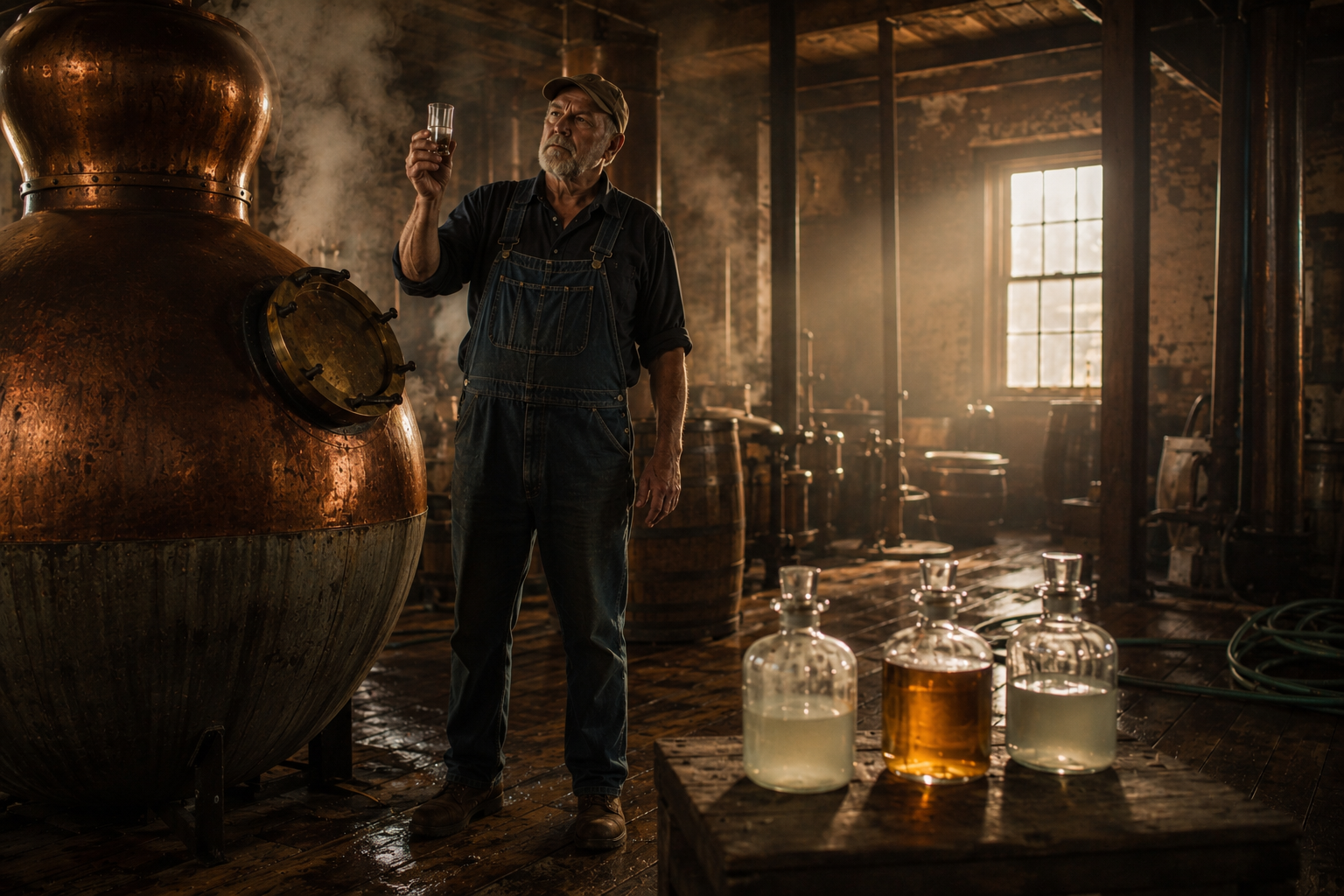
Here’s what I love about this though: you can’t automate this moment perfectly. A skilled distiller is literally smelling, tasting, and feeling the shift as it happens. One second too early or too late changes the entire whiskey. It’s not dramatic in a cinematic way, it’s more like watching a baker pull bread at exactly the right moment. You either know or you don’t.
This cut is the distiller signing their name on the spirit.
The Tails: Handle With Care
The tails are the heavy, oily, funky end of the run. If you let it run too long, wet cardboard aromas start creeping in. Some distillers keep a small amount of the tails to add body and texture. Most cut early to keep things clean. In older traditions, tails went into the next run or fueled farm equipment. They rarely made it into the final bottle.
Why the Cuts Matter More Than the Barrel
Barrels can’t fix bad cuts. Age can’t fix bad cuts. A premium mash bill can’t fix bad cuts.
The personality of the spirit gets decided on the still. Whatever goes into that barrel already has its fate locked in. You’re not fixing anything after that point, you’re just developing what’s already there.
Craft Distillers vs. The Big Operations
The approach looks completely different depending on who’s doing it.
Craft distillers typically use pot stills or small hybrid stills. The cuts get made by taste, smell, and temperature readings. It’s intimate work. A little risky. Almost entirely instinct-driven. The distiller is standing there, nose in the glass, making a call.
Large operations like Jack Daniel’s work differently. They use towering column stills that separate heads, hearts, and tails structurally, through physics, not personal judgment. The consistent heart vapor gets pulled off the center plates automatically. Then it goes through ten feet of charcoal filtration, which softens anything that slipped through unwanted.
Craft uses instinct. The big guys use engineering. Neither is wrong. They’re solving the same problem with different tools.
Two Cuts, Every Whiskey on Earth
Whether you’re working in a converted barn with a copper pot still or overseeing a still the size of a two-story building, every whiskey in existence starts with those same two cuts.
That’s the birth moment. That’s where character gets decided.
Everything after that, the years in oak, the warehouse conditions, the finishing barrels, that’s all the story of time doing its slow work. But the story started right there on the still, in two decisions made by a human being paying very close attention.
Next time you’re sipping something you love, you’re tasting more than just those two cuts. You’re tasting someone’s judgment.