Think about the last time you held a cup of coffee without thinking about it. For a lot of people in the Black Hills, that stopped being automatic years ago. The spoon shakes. The glass spills. Eventually they quit going out to eat, because it feels like the whole restaurant is watching.
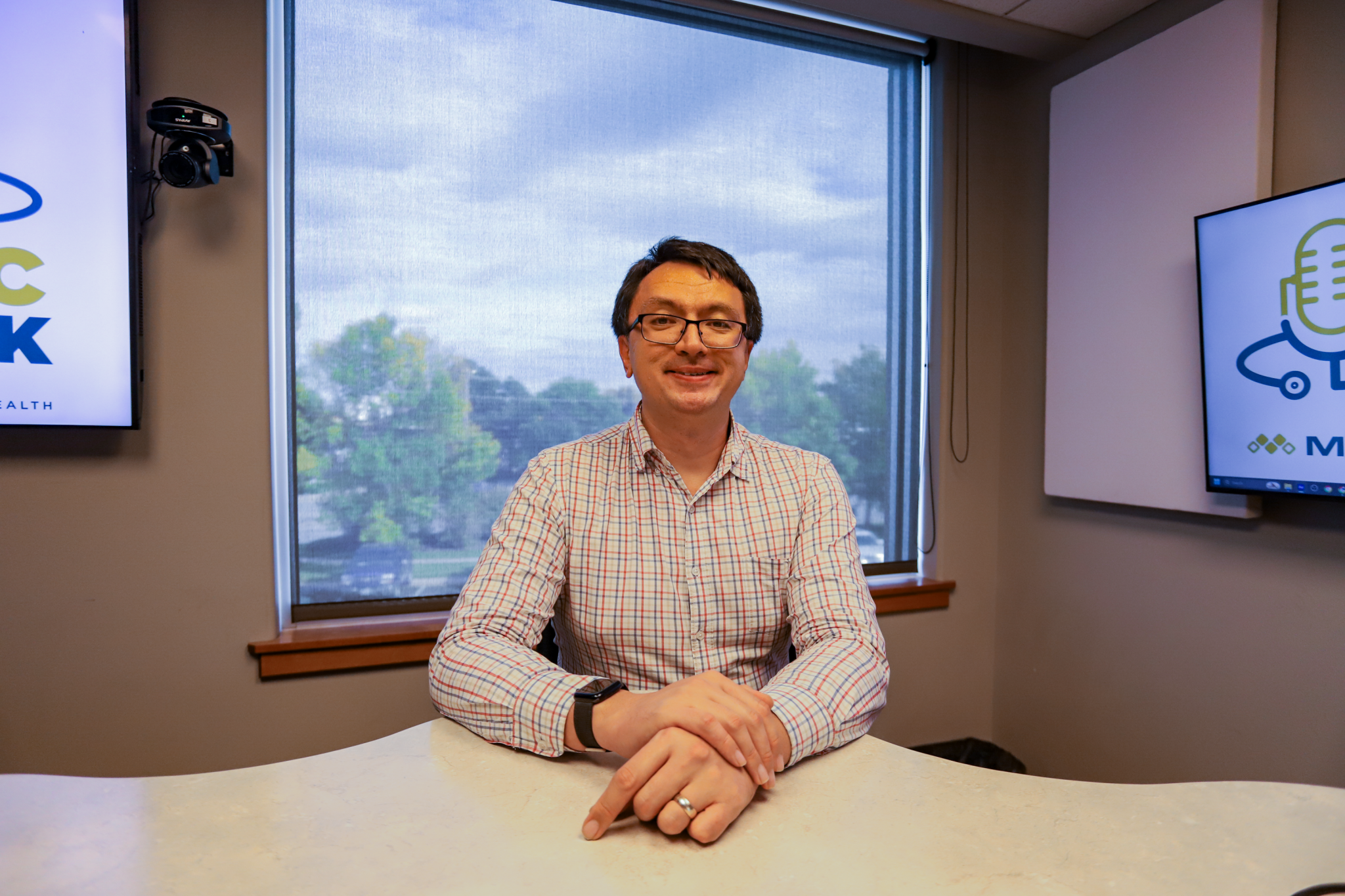
Dr. Robert Ziechmann, a neurosurgeon at Monument Health, calls deep brain stimulation a quality of life surgery, and he means it literally.
“It’s something that a lot of times people have suffered from not being able to feed themselves, not being able to drink a cup of coffee, write their name, or even use their cell phone,” he said on Doc Talk.
For essential tremor, patients average about ten years on medications before surgery enters the conversation.
What the surgery actually does
Electrodes go into specific deep structures of the brain, placed within one to one and a half millimeters of the target. Wires run under the skin to a battery in the chest that works like a pacemaker. A small amount of electrical stimulation in exactly the right nucleus can quiet tremor, stiffness and slowness.
The FDA has approved it for Parkinson’s disease, essential tremor, dystonia and epilepsy. Those are the conditions Monument treats with it today.
You can sleep through it now
Most people picture those viral videos where somebody plays guitar on the operating table. That used to be how this worked. Patients wore a head frame, stayed awake, and got tested mid-surgery.
Deep brain stimulation was invented in the X-ray era. CT and MRI changed what surgeons can see before they make an incision, and the trend nationally has moved toward anesthesia. Ziechmann places the electrodes, takes a CT scan to confirm position, and the patient wakes up with the device in place.
“It’s kind of like going to the airport,” he said. “There’s a lot of setup. You got to get the plane in the right spot before taking off and getting to where you want to go.”
Patients typically go home the next morning.
Awake brain surgery still happens, mostly for mapping language, since there’s no good way to test speech with electrodes on the scalp.
Programming is where the work happens
The device doesn’t get switched on and left alone. After some healing time, patients come back to clinic and Dr. Ziechmann walks through the settings with them.
That part is collaborative. Someone wants to walk in the park again, so they go for a walk in clinic and see how it feels. Someone else wants fifty miles on a bike.
Batteries vary too. The standard non-rechargeable option lasts around five years depending on how much energy you’re drawing. The rechargeable version is smaller and charges at home through a sling that holds a contact charger, roughly forty minutes once a week. Ziechmann suggests making it a ritual. Sunday night, the news, a show, done.
Three companies make these systems, and each sends patients home with their own controller and charger.
Both conditions progress, and nobody has a tool yet to slow that down. The therapy gets adjusted along the way, so relief holds steady as the disease changes.
Parkinson’s is growing, and some of it is preventable
Parkinson’s is now outpacing the growth rate of Alzheimer’s. Part of that appears to be chemical exposure. Pesticide research, much of it from the University of Florida group led by movement disorder neurologist Dr. Michael Okun, points to a direct causal link with paraquat. Several states have banned it. Genetics play a role in some cases, though mostly it looks like predisposition plus exposure.
The fear people bring in the door
The worry Ziechmann hears most is that the device will change who someone is. There’s a theoretical mood and behavior risk tied to one specific target he doesn’t typically use, and every Parkinson’s patient goes through standard neuropsychological screening anyway.
The real number he talks about is infection. Three to five percent nationally, and an infected device has to come out. He’s seen patients get reimplanted, continue therapy, and carry on with no lasting effects beyond two surgeries.
Research is pushing into chronic pain, Huntington’s, OCD, depression and obesity, at different brain targets, all outside current FDA approval.
Where to start
Primary care doctors manage a lot of essential tremor, since they’re the ones prescribing these medications. General neurologists handle plenty too. When medication stops controlling symptoms, that’s the referral point. Part of the workup is ruling out the lookalikes, the less common disorders that mimic Parkinson’s or essential tremor and don’t respond to stimulation.
All of it happens in Rapid City now. Nobody has to book a hotel in Denver or Minneapolis for it.