
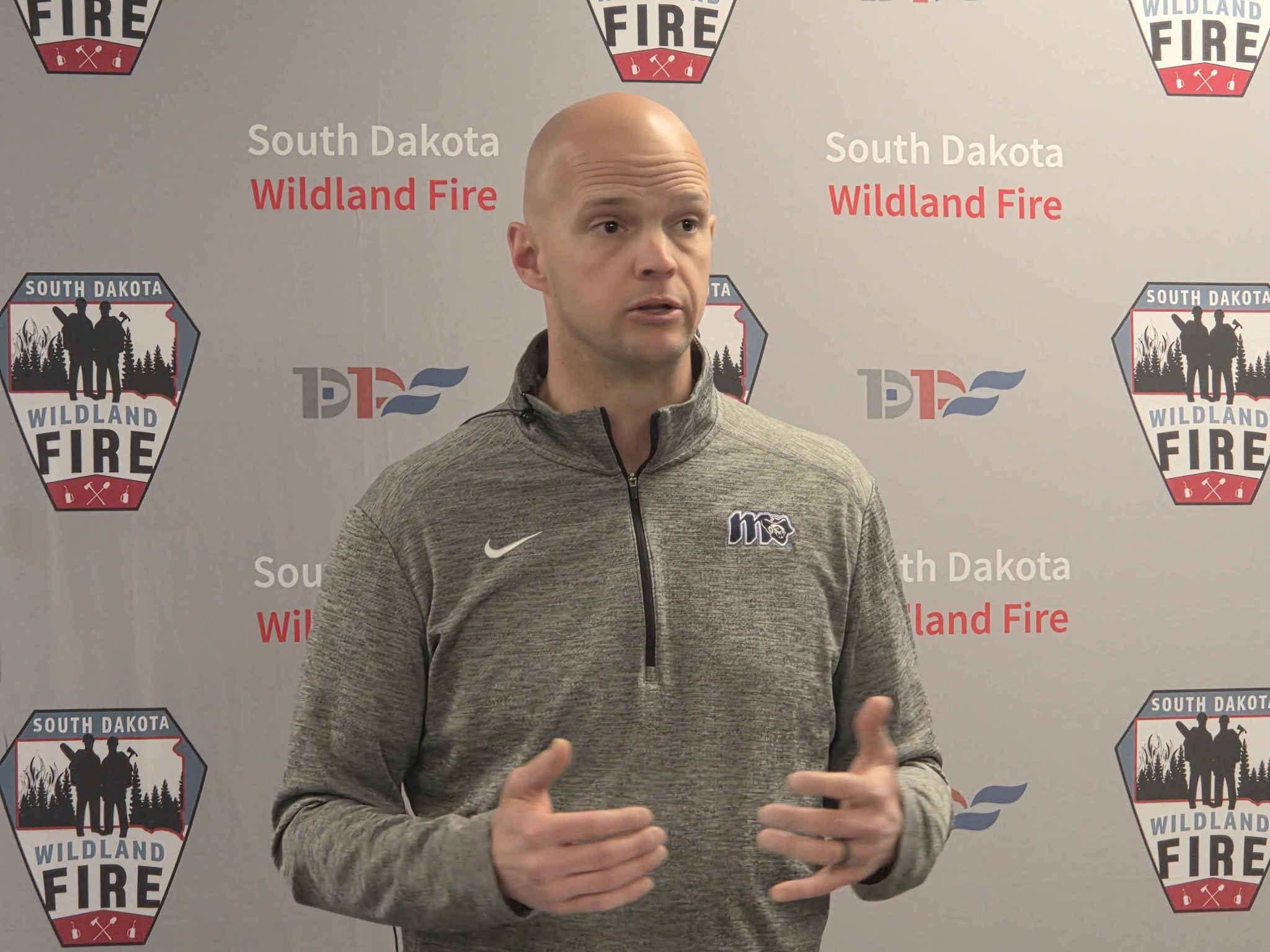
RAPID CITY, SD — This morning, representatives of SD Wildland Fire spoke at their Rapid City district office in an update following an outbreak of multiple large-scale wildfires over past months. Their message? An individual can’t change the weather, but they can keep their homes and families safe by preparing ahead of time.
While we enter into the wettest months of the year, a dry winter driven by anomalously high temperatures across the western US has hit the Black Hills hard and left ample fuel for fires – primarily in extremely dry grasses left without the protection provided by snowfall. While the green is returning to the world however, state Fire Meteorologist Darren Clabo says it isn’t looking good for this season. When asked if there was any hope for increased rainfall to make up for low moisture, he responded bluntly, saying “No”.
“Since the start of the year, January 1st, the Black Hills, Southern South Dakota, have seen 30-40% of average precipitation. It’s been exceptionally dry.” said Clabo, “Not only that, we’ve seen, especially across the Southwestern corridor of the state. It’s been the hottest 3 month period on record, our temperatures have been exceeding 10° above average over the course of 3 months – which is really unheard of. This is unprecedented heat”. Clabo says he has significant concerns for the coming summer, but SD Wildland Fire emphasizes that the most important thing to do with this information is to be prepared.
SDWF Fields Program Manager Logan Brown says that in terms of home preparedness the two places which are most important is the five-foot border around the home (which Brown calls the Immediate Zone) and the area beyond that. Obvious measures such as building homes out of heat-resistant materials are important, however other areas of focus are making sure the area directly touching a home is nonflammable. “We’re looking at using some gravel instead of mulch, because mulch will burn if you have plants around there.” said brown, “a lot of times we’ll see needle or leaf litter built up in that immediate zone, where it’s up against the deck or the house”. Brown encourages homeowners to ensure their decks is clear of pine needles both above and below, and further out (In what he calls the intermediate zone) encourages leaving grasses between 4-6 inches in length to maintain the health of the grass, making sure dry branches are taken care of, and avoiding keeping plants which pose ignition risk even while adequately hydrated, such as Juniper.
More resources are available on SDWF’s website. SDWF also noted that they had received several requests for burn permits from the public, and wished to remind residents that burn pile season has been ended prematurely in light of current dry conditions. Pile burning without a permit is illegal in the Black Hills, and is punishable by a fine of $500 or up to 30 days in jail.


