“Free trade must be fair trade…..”
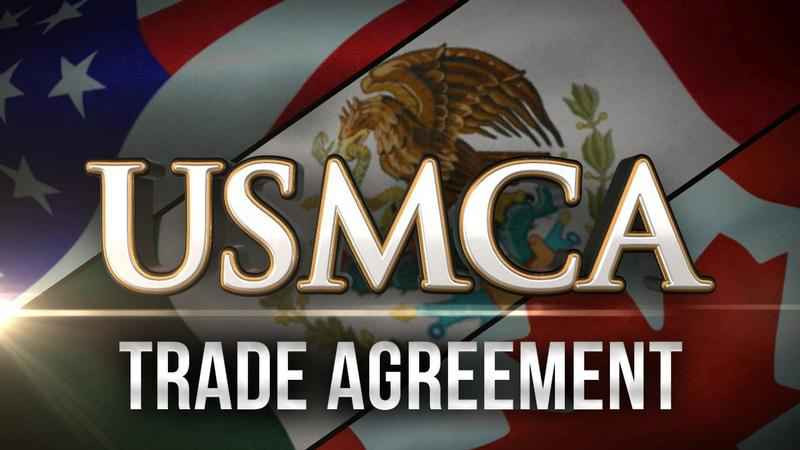
WASHINGTON D.C. — North American trade enters a period of high-stakes uncertainty as the July 1, 2026, deadline for the first formal “joint review” of the United States-Mexico-Canada Agreement (USMCA) looms.
For the first time since the agreement replaced NAFTA in 2020 under the first Trump administration, the three nations must provide written confirmation of their intent to extend the deal for another 16 years.
While the agreement will not immediately expire if no consensus is reached, a failure to renew this summer would trigger a “sunset” countdown, shifting the region into a cycle of grueling annual reviews and potentially market and business investment instability.
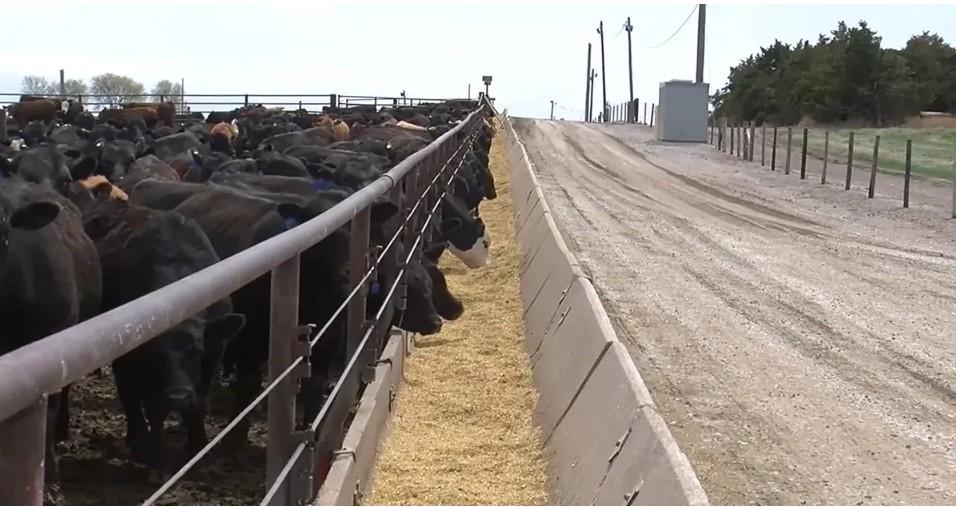
Groups like R-CALF USA argue that the USMCA has failed to protect domestic producers from a “flood” of cheaper imports and has contributed to a shrinking U.S. cattle herd.
“For American ranchers, a growing trade deficit is a barrier to rebuilding and expanding the domestic cattle herd. “For more than 30 years, imports have steadily outpaced exports, undermining the profitability of U.S. ranchers,” said Bill Bullard, CEO of R-CALF USA.
While United States Cattlemen Association (USCA) generally supports the framework of North American trade, their commentary emphasizes that “free trade” must also be “fair trade,” particularly regarding transparency and market access.
USCA is pushing the U.S. Trade Representative (USTR) to use the July 1 deadline to force concessions on labeling and import monitoring before signing off on a full renewal.
Justin Tupper of St. Onge, S.D., and president of USCA has expressed frustration when trade policies favor imports over domestic production, especially as the U.S. cattle herd reaches historic lows.
“When Washington pushes policies that flood the market with imported beef, it sends a crystal-clear message to every American rancher: ‘Don’t invest.‘ We cannot rebuild our domestic herd if every signal we receive tells us we’ll be undercut by foreign supply.”
Meanwhile, the National Cattlemen’s Beef Association (NCBA) and the Agricultural Coalition for the USMCA argue that the agreement is vital for protecting the $60 billion in agricultural exports to Canada and Mexico.
“This is a scenario many ranchers fear, as it creates “prolonged uncertainty” that could discourage long-term investment in North American livestock infrastructure,” according to one NCBA spokesperson.
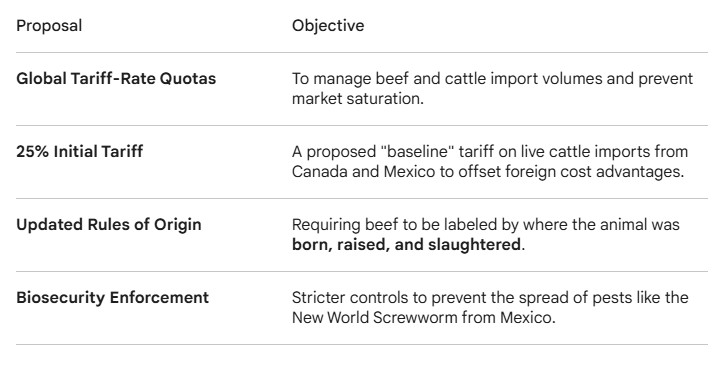
For those ranchers and cattle organizations seeking changes to the agreement, they have proposed several specific technical “fixes” during the review process:
Recent weeks have seen a flurry of activity in Washington, Mexico City, and Ottawa. However, a “clean” extension appears increasingly unlikely as the Trump administration signals it will not recommend renewal without significant concessions.
In early 2026, Trump stated that it was “irrelevant” to him whether the agreement is formally extended this year. He remarked, “We could have it or not, it wouldn’t matter to me,” signaling that he is not in a rush to provide the stability of a 16-year renewal.