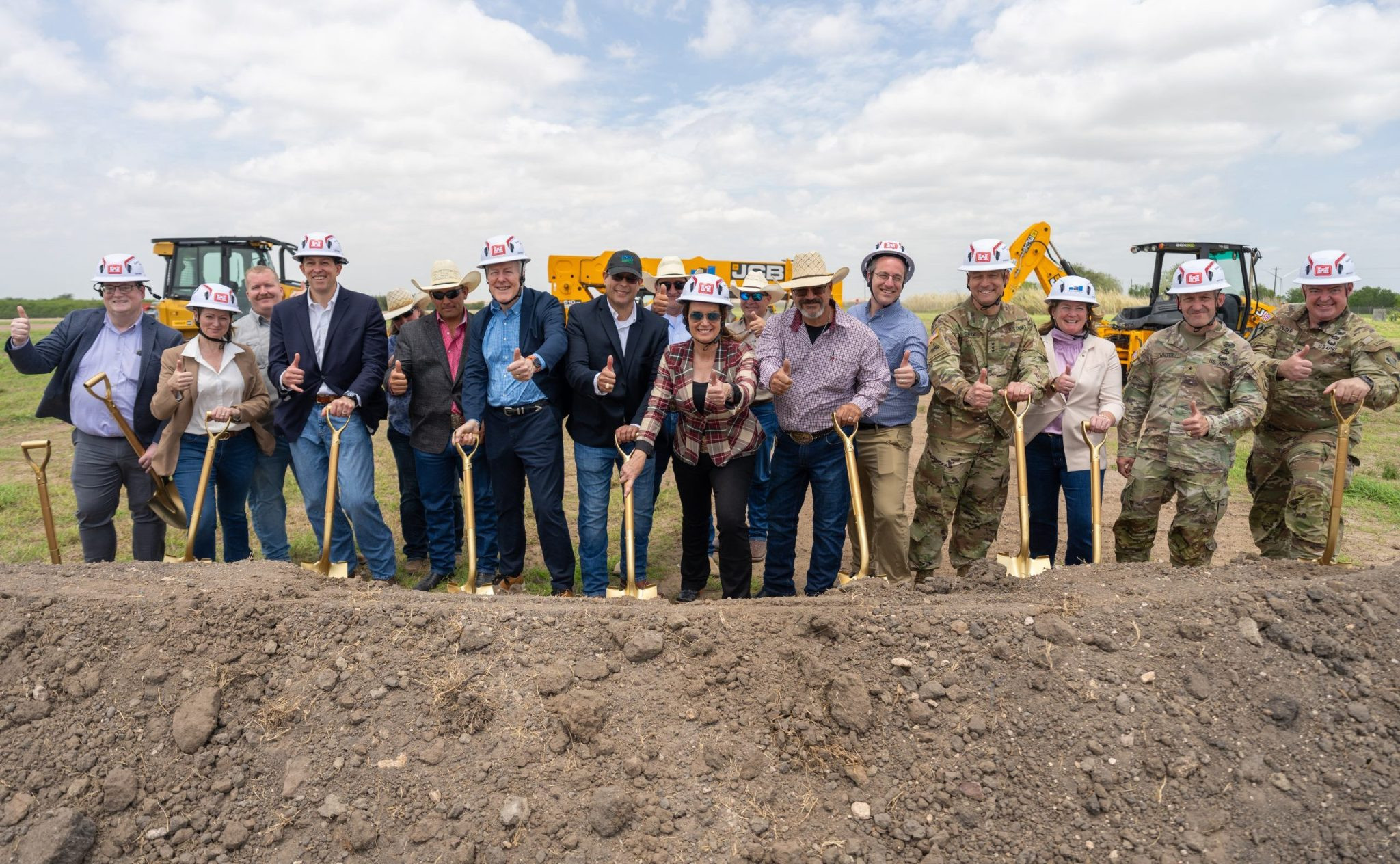

EDINBURG, TX — Amid a growing biological threat at the southern border, U.S. officials gathered at Moore Air Base on Friday. April 17, 2026, to break ground on a massive, $750 million sterile fly production facility designed to stop the “flesh-eating” New World screwworm (NWS) in its tracks.
The ceremony, led by U.S. Secretary of Agriculture Brooke L. Rollins and the U.S. Army Corps of Engineers, marks a significant domestic investment in screwworm defense since the pest was first eradicated from the United States in 1966.
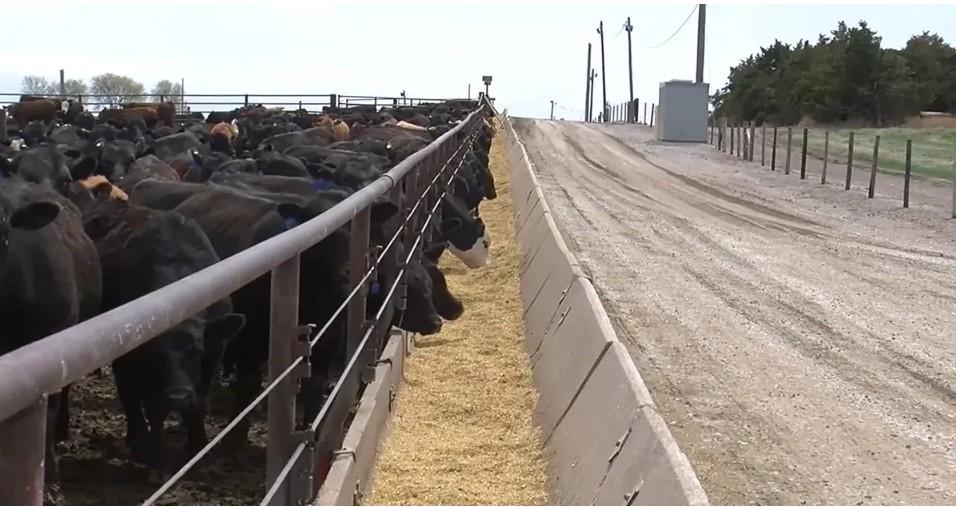
The new facility is the cornerstone of the administration’s strategy to protect the nation’s $100 billion cattle industry. While a smaller dispersal facility opened at the same site in February to handle flies shipped from Panama, this new production plant will allow the U.S. to breed and sterilize its own “biological weapons” against the parasite.
“This puts sterile fly production in American hands,” Secretary Rollins told a crowd of ranchers and local officials. “We will no longer have to rely solely on international partners to protect our borders from a pest that can devastate a herd in a matter of days.”
Mexico identified screwworm in a cow in a southern state near the Guatemalan border in November 2024, prompting USDA to halt imports.
The Biden administration first approved emergency Commodity Credit Corporation funding of $156.4 million in 2023 to bolster the fight against flesh-eating screwworm in Mexico and Central America. Then, in 2024, the Biden administration approved a second-round of emergency funding of $235 million, targeting the construction of a new sterile fly facility.
Following Trump’s re-election in 2024, his administration canceled the $235 million in funding that had been approved earlier by the Biden administration – and reopened the US/Mexico border to cattle trade on Feb. 1, 2025.
The border was closed again on May 11, 2025 due to the aggressive northward spread of the NWS that has continued to advance closer to the U.S. border, most recently detected 90 miles from Texas.
The New World screwworm is not a typical fly. It lays its eggs in the open wounds of warm-blooded animals—including cattle, horses, dogs, and even humans. Once hatched, the larvae burrow into the living tissue, literally eating the host alive.
The threat has turned urgent in 2026. Recent reports indicate active screwworm cases have been detected in the Mexican state of Nuevo León, roughly 90 miles from the Texas border. In response, Governor Greg Abbott issued a disaster declaration earlier this year, and land-based livestock imports from Mexico remain strictly restricted.
The facility will use the Sterile Insect Technique (SIT), a form of biological birth control that has been the gold standard for eradication for decades.
- Breeding: Millions of screwworm flies are raised in a highly secure laboratory environment.
- Sterilization: The male flies are exposed to low-dose irradiation, rendering them sterile but otherwise healthy.
- Release: These sterile males are released by aircraft over “buffer zones.”
- Population Collapse: Because female screwworms only mate once in their life, mating with a sterile male results in eggs that never hatch. The wild population eventually collapses.
Construction of the facility is being fast-tracked through a partnership with the U.S. Army Corps of Engineers.
- November 2027: Targeted date for “Initial Operational Capability,” producing 100 million flies per week.
- Full Capacity: The facility is designed to eventually scale to 300 million flies per week, providing a “Texas-sized” response to any potential outbreak on U.S. soil.
“For our ranchers in South Texas, this isn’t just about bugs; it’s about their livelihood,” said Representative Monica De La Cruz. “This $750 million investment ensures that the Rio Grande Valley is the first line of defense for the entire American food supply.”
Besides the $750 million facility, the USDA has invested $21 million in modernizing a facility in Metapa, Mexico, to boost sterile fly production, with that project expected to be operational in summer 2026.
This initiative is part of a broader, long-term effort to protect U.S. agriculture, as NWS larvae cause severe damage to livestock, wildlife, and pets.