
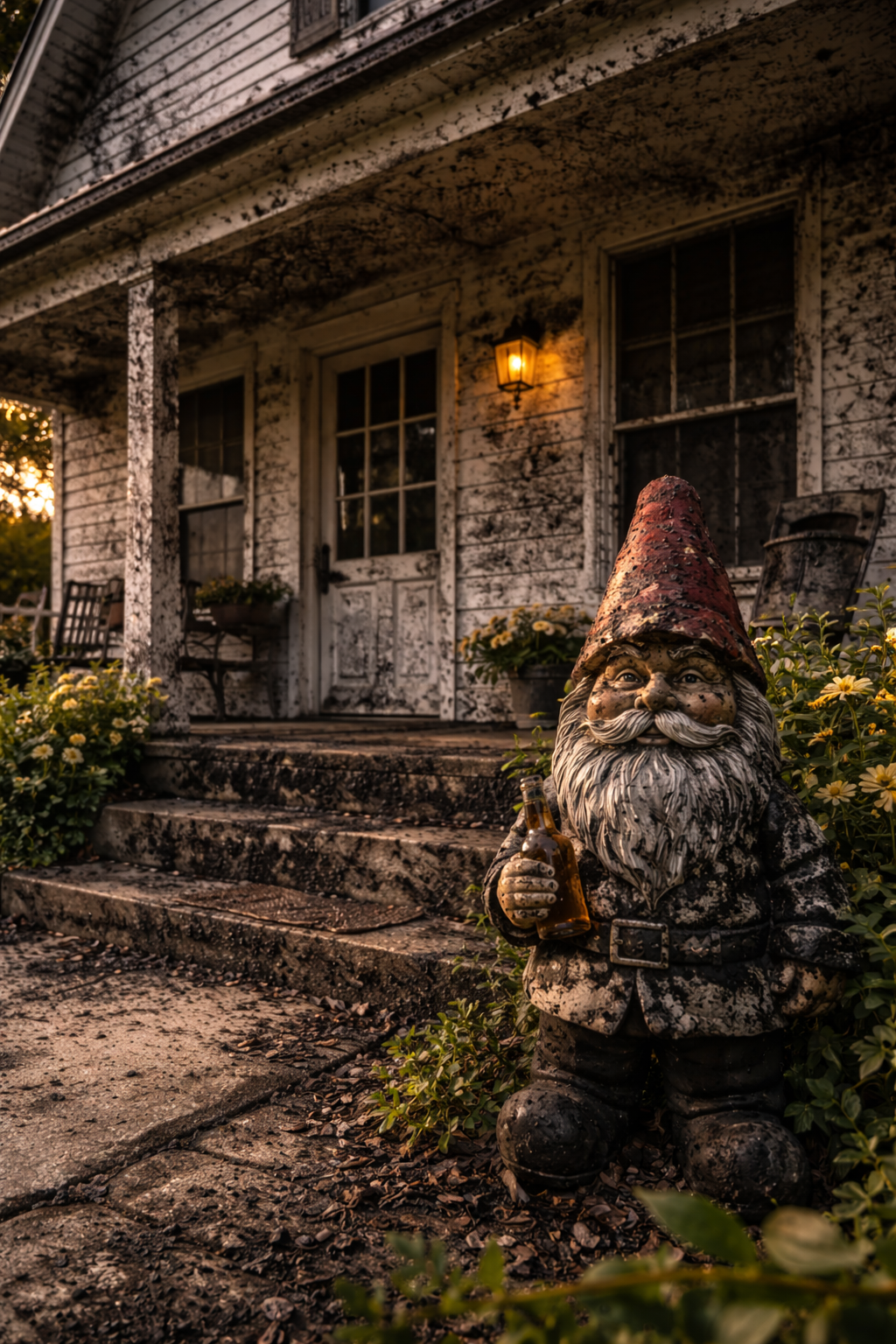
You found it. The house you’ve been picturing for years. Quiet roads, rolling hills, and a short walk from one of Kentucky’s legendary distilleries. On a still evening, the air carries that faint, warm vanilla scent of aging bourbon. You think, this is it.
About a year in, you notice something.
A dark film on your siding. Your car. Your mailbox. Your patio chairs look like they’ve been buried in a coal mine. You scrub it off. It comes back. You scrub again.
Welcome to life with Baudoinia compniacensis. Most people around here call it whiskey fungus, and once you know it’s there, you’ll start seeing it everywhere.
What Actually Causes It
Every year, somewhere between 2 and 5 percent of the liquid inside each aging barrel evaporates. Distillers have a name for it: the Angel’s Share. It sounds poetic, and honestly it is, until you understand what those angels are leaving behind.
That escaping vapor is rich in ethanol. When it drifts out of the rickhouses and combines with humidity in the air, it creates the perfect conditions for whiskey fungus to thrive. The organism feeds on airborne alcohol. Give it enough ethanol and a little moisture, and it’ll colonize anything that holds still long enough. Trees. Street signs. Garden gnomes. Your car bumper. The fungus doesn’t discriminate.
It was first recorded in the early 1870s near brandy aging facilities in the Cognac region of France. Since then, it’s spread wherever spirits age in barrels, and nowhere has more barrels than Kentucky.
Why It’s Getting Worse
Kentucky produces roughly 95 percent of the world’s bourbon. The industry now contributes more than $10.6 billion annually to the state’s economy and supports nearly 24,000 jobs. Bourbon tourism alone draws close to 3 million visitors a year along the Kentucky Bourbon Trail.
More demand means more barrels. More barrels mean more Angel’s Share drifting across neighborhoods. The production boom that’s been good for Kentucky’s economy has also been very good for whiskey fungus.
Residents near distilleries have filed lawsuits and class action complaints over the years, pushing for emissions controls or mitigation systems. Distillers counter that airflow is fundamental to how bourbon develops its flavor, color, and aroma. Clamping down too aggressively on evaporation would change the product. It’s a genuinely complicated debate in a state where bourbon isn’t just an industry, it’s an identity.
Is It Actually Dangerous?
This is the question that stops most people cold when they first see it, because it looks alarming. The short answer is no. Researchers have not found human health risks from exposure to whiskey fungus. It’s not toxic black mold. It won’t harm your soil, your pets, or the inside of your home. The Kentucky government’s own assessments have concluded it causes cosmetic effects, not structural ones.
It is, however, relentless.
The Real Cost Is Your Time
Removing whiskey fungus takes effort. Homeowners near rickhouses often power wash multiple times a year, use specialized cleaning solutions, and scrub surfaces that the average homeowner would never think twice about. How much of it you get depends on how close you are to aging warehouses and which way the wind tends to blow.
Most people in bourbon country factor it in the same way they budget for lawn care. It’s part of the address.
The Trade-Off Is Real, and Worth Knowing
Living near a Kentucky distillery comes with genuine perks. Easy access to some of the best whiskey on earth, the warmth of a tight-knit community built around a craft with real history, and an economy that’s actually growing.
It also comes with a power washer.
If you’re dreaming about putting down roots in bourbon country, the full picture includes both. The Angel’s Share is part of what makes Kentucky bourbon what it is. It also drifts right into your neighborhood.
Bring realistic expectations, a good scrub brush, and maybe a glass of something to make the cleaning go easier.
For more on the stories where whiskey meets history, chemistry, and the occasional unexpected side effect, listen to Rob and Mark on Whiskey at Work.