Picture your kid blacking out for a few seconds at a time and nobody can tell you why. The doctor says the answer is five days hooked up to monitors and a camera, waiting to catch one of these episodes as it happens.
Until this year, that meant Minnesota or Colorado. A hotel room, time off work, somebody else’s kitchen, while you wait for a brain to misbehave on schedule.
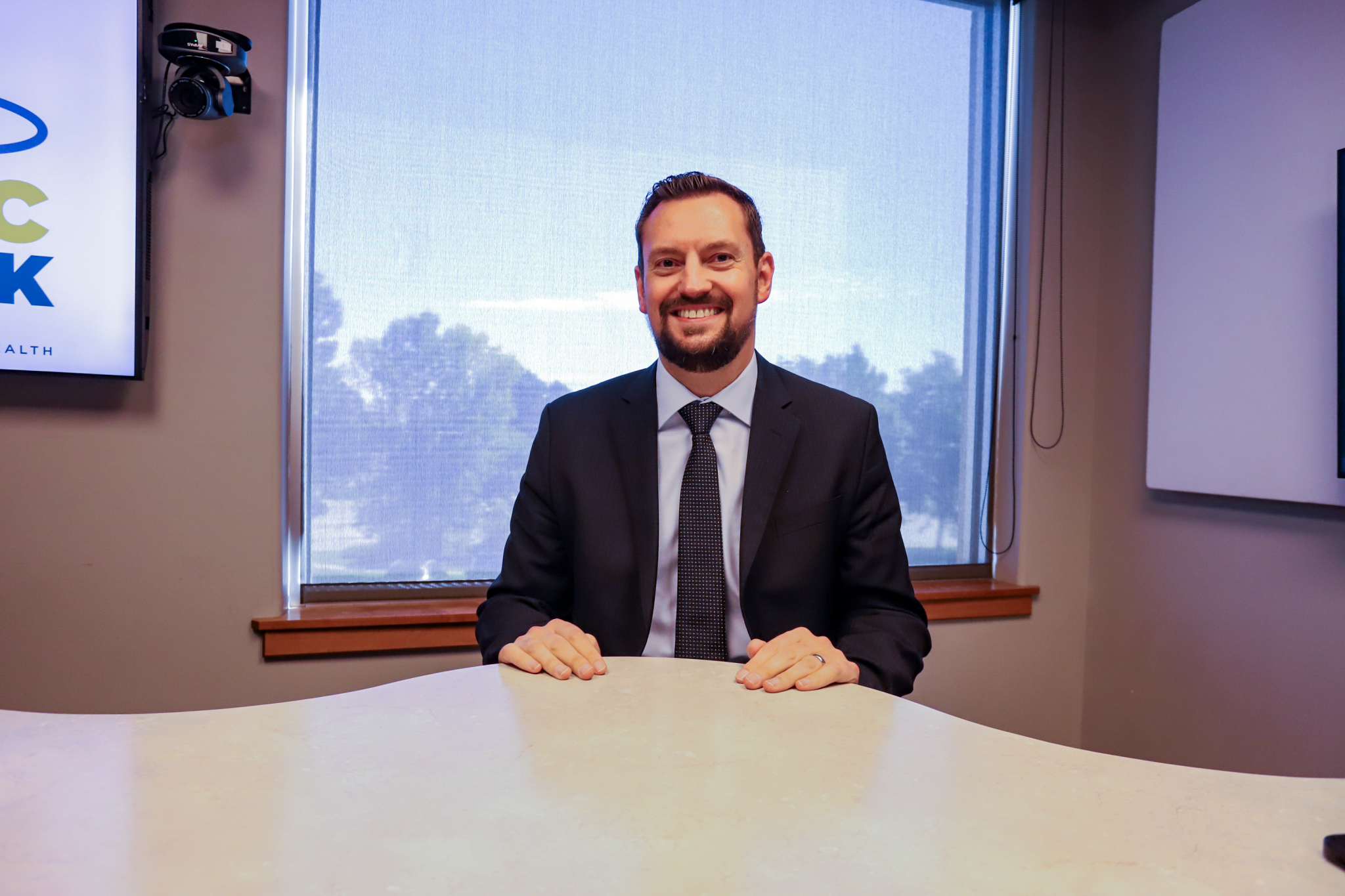
Monument Health opened a two-bed epilepsy monitoring unit in Rapid City this year, the first of its kind in the region. Dr. Donald Barr, an epileptologist and neurology section chief at Monument Health, came on Doc Talk to walk through it.
He found Rapid City by accident
Barr grew up in California, did his residency in central Texas and a two-year epilepsy fellowship at the University of Miami. Then he took locums work, the physician version of a traveling nurse. He’d never heard of Rapid City until somebody pitched it to him and mentioned Mount Rushmore was close.
One week turned into two, then four, then six. His fiancée, from Buenos Aires by way of Milan and Miami, flew out and spent her days exploring the Badlands and Deadwood while he worked. “I think this could work,” she told him.
“So I said, all right, well, let’s get married, have a baby and move to Rapid City,” Barr said. “And so we decided to do all three.”
His father had epilepsy. A jet fighter pilot, a Princeton graduate, a man who would ask his son to hold his hand before he’d stare off and smack his lips.
“I was the rock for him,” Barr said. “I could kind of understand people from both sides of the curtain.”
What’s actually happening in there
Barr describes a seizure as abnormal electrical activity and the brain as a circuit board. Focal epilepsy is one spark that ramps up and spreads. Generalized epilepsy is the whole board firing at once, and the difference decides which medications can help.
Roughly 40 percent of people with epilepsy are medically refractory. Two medications, together or separately, and the seizures keep coming. That’s when the conversation moves past prescriptions.
Five days of waiting on purpose
Electrodes go on, your head gets wrapped in what Barr calls a little turban, and a technician watches your brainwaves around the clock. Sometimes the team reduces medication to provoke a seizure, because the goal is catching one on camera and on EEG to find out where it starts.
Abortive medications on hand, backup medications behind those, nurses trained in emergency seizure management.
Days are slow. iPads, movies, texting, family in the room. Nobody wanders the hallway, because a fall is a head injury.
Sometimes the test shows the episodes aren’t electrical. Psychogenic nonepileptic events come from a stress response to past trauma and get treated with cognitive behavioral therapy, which can take a patient off a pile of medications they never needed.
The part Barr calls euphoric
One patient came in, got evaluated, and hasn’t had a seizure since.
“To see him, to identify what’s going on, to treat it appropriately, and have him come in with his mother, who is ecstatic that her boy hasn’t had a seizure,” Barr said. “It’s the most rewarding experience.”
Barr says he has this conversation with 80 percent of his patients, the anxiety of waiting for the other shoe to drop.
“It’s regaining a little bit of life’s predictability,” he said.
Uncontrolled seizures cost people cognitive function, driving, the ability to hold a job. People have strokes and heart attacks during them. People die from them.
Where it goes from here
The unit expects two to three dozen patients a year, and the waitlist already sits around 30 people. Monument Health hired a functional neurosurgeon with an epilepsy fellowship, and some cases will still route to Mayo or Colorado while the program grows.
For removable seizure sites, surgery can be curative. For sites in the eloquent cortex, where motor control and language live, an implanted device called RNS works like noise-canceling headphones, sending a signal that shortens or stops the seizure.
Start with your primary care doctor. Bring the smells, the staring, whatever the person next to you noticed.
“At the end of the day, I work for them,” Barr said. “If they feel like they’re not being heard, you can always speak up and push a little more.”